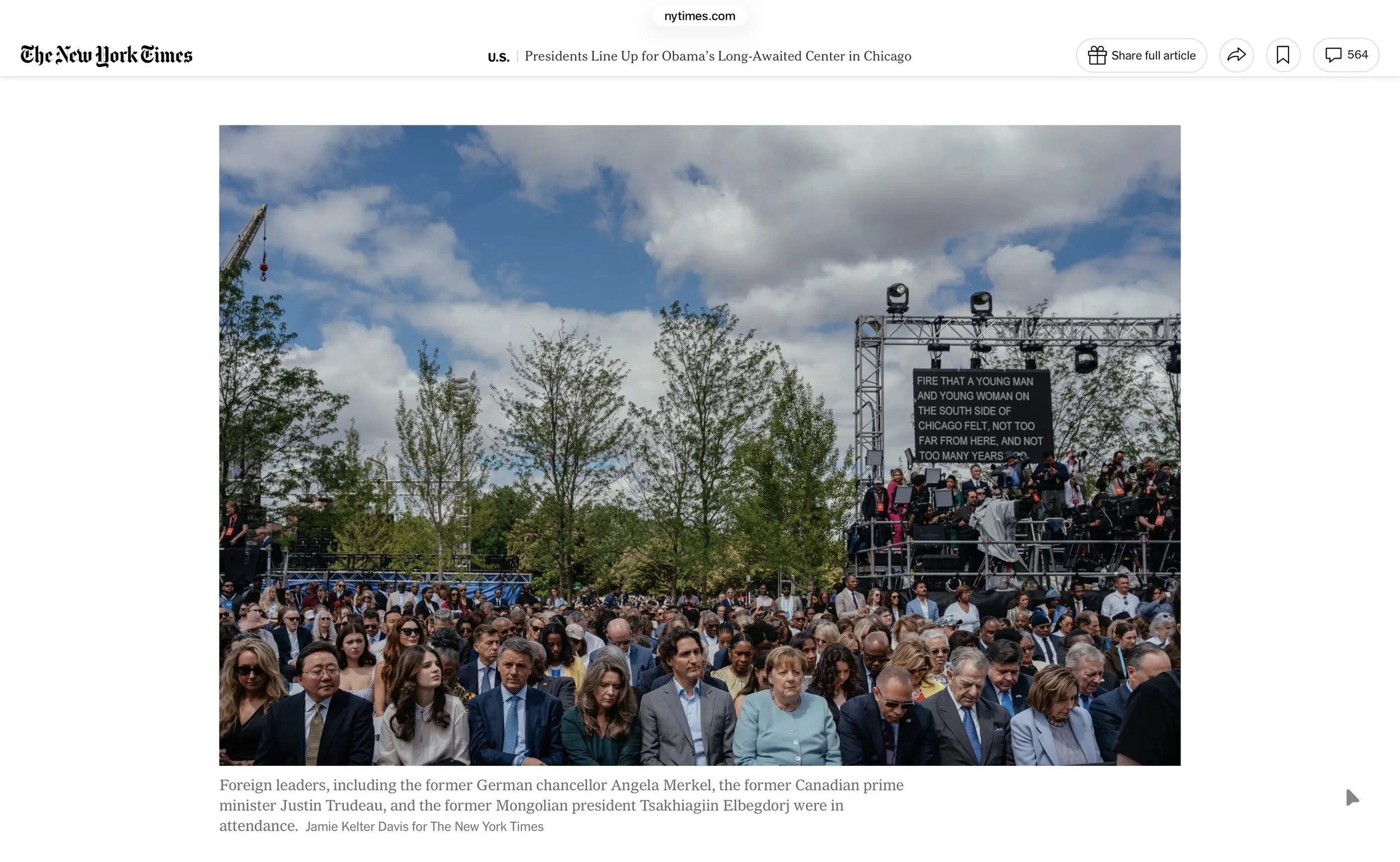
Who Gets to Shape the Narrative of a Nation?
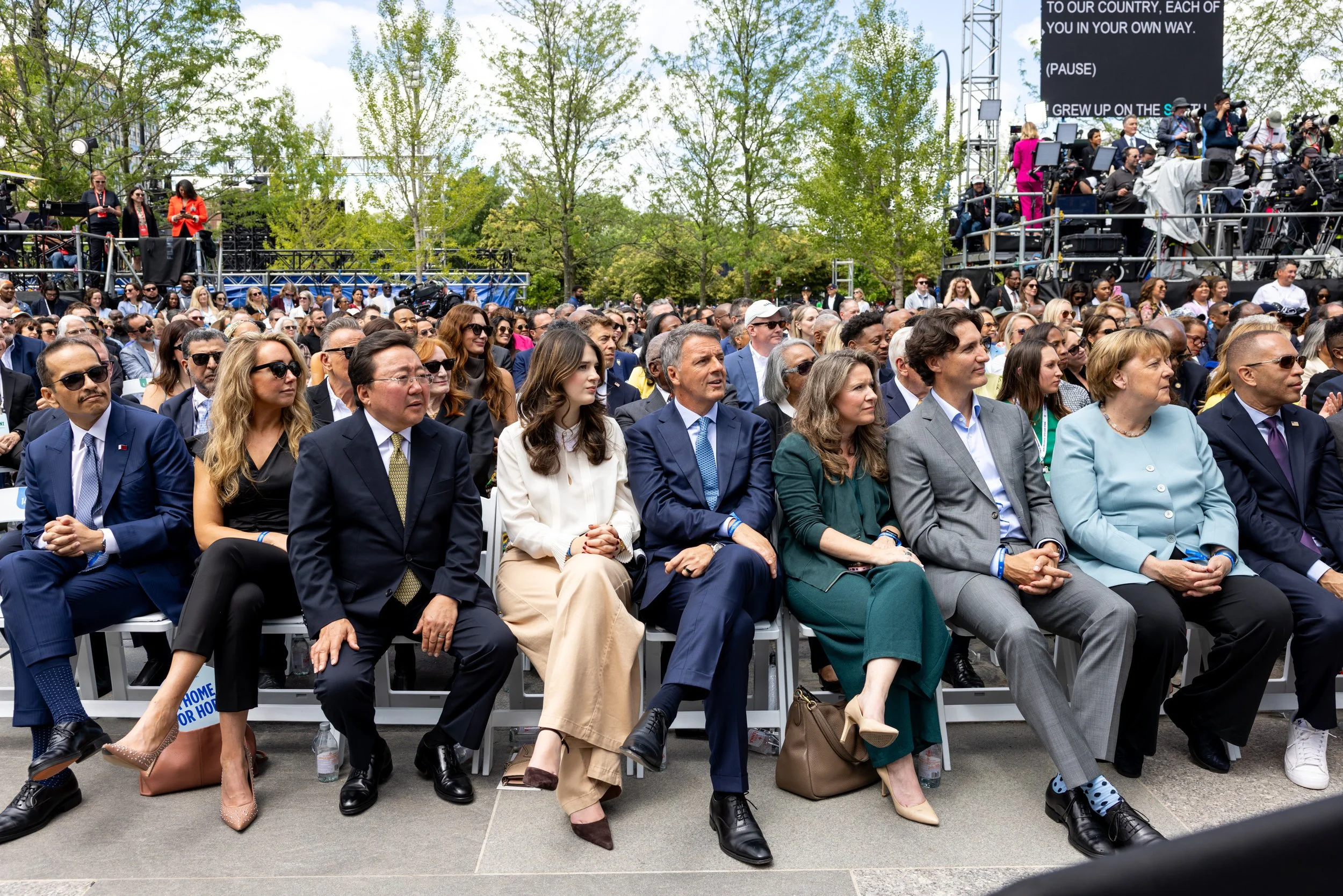
International leaders / Obama Presidential Center opening ceremony.
Yesterday, I attended the opening of the Obama Presidential Center in Chicago.
I listened to President Obama speak. I watched world leaders, business leaders, philanthropists, and cultural leaders navigate and interact.
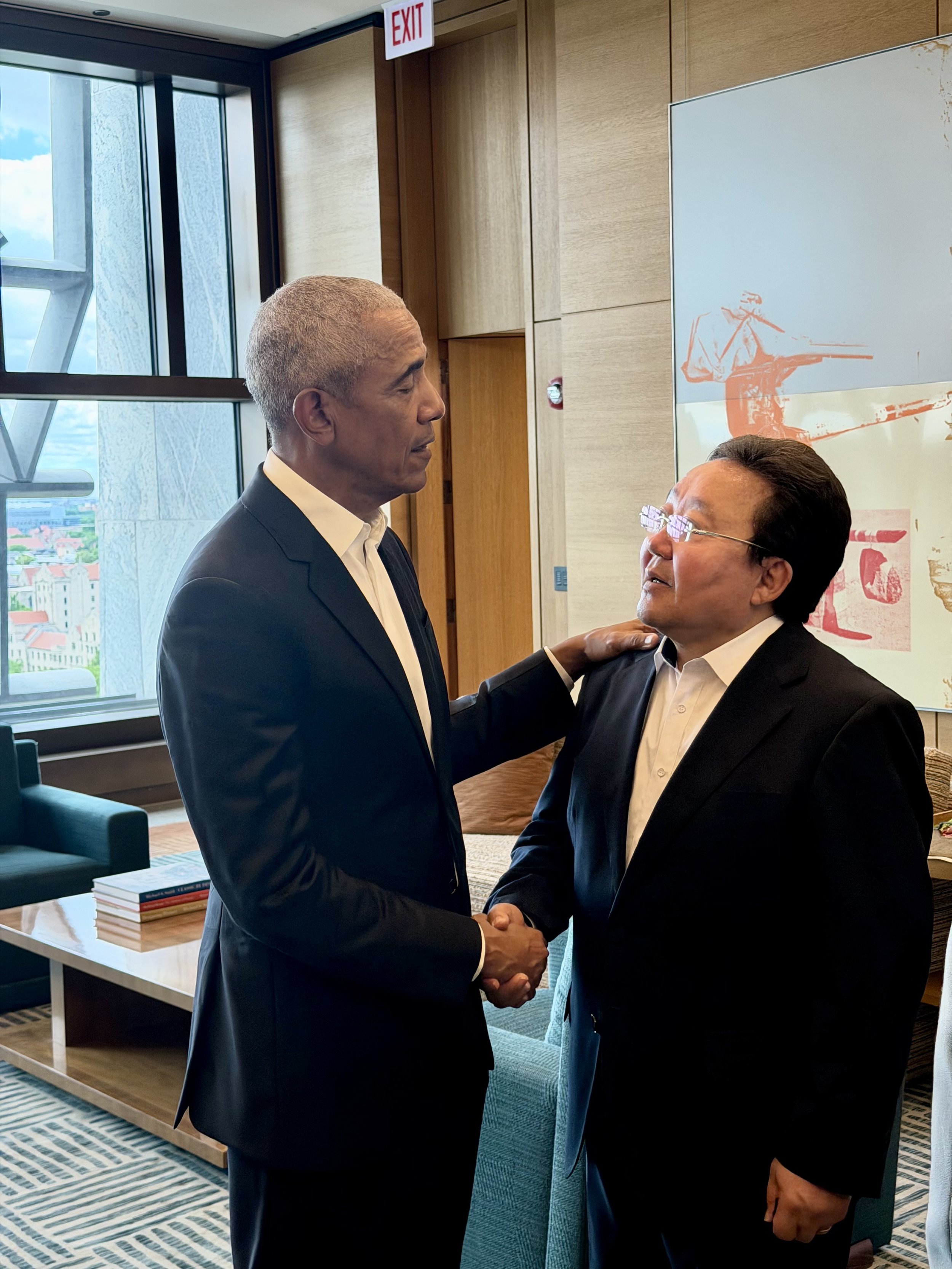
Serving the same two terms, Presidents Obama and Elbegdorj.
But what stayed with me most was not a single speech or conversation.
It was a question.
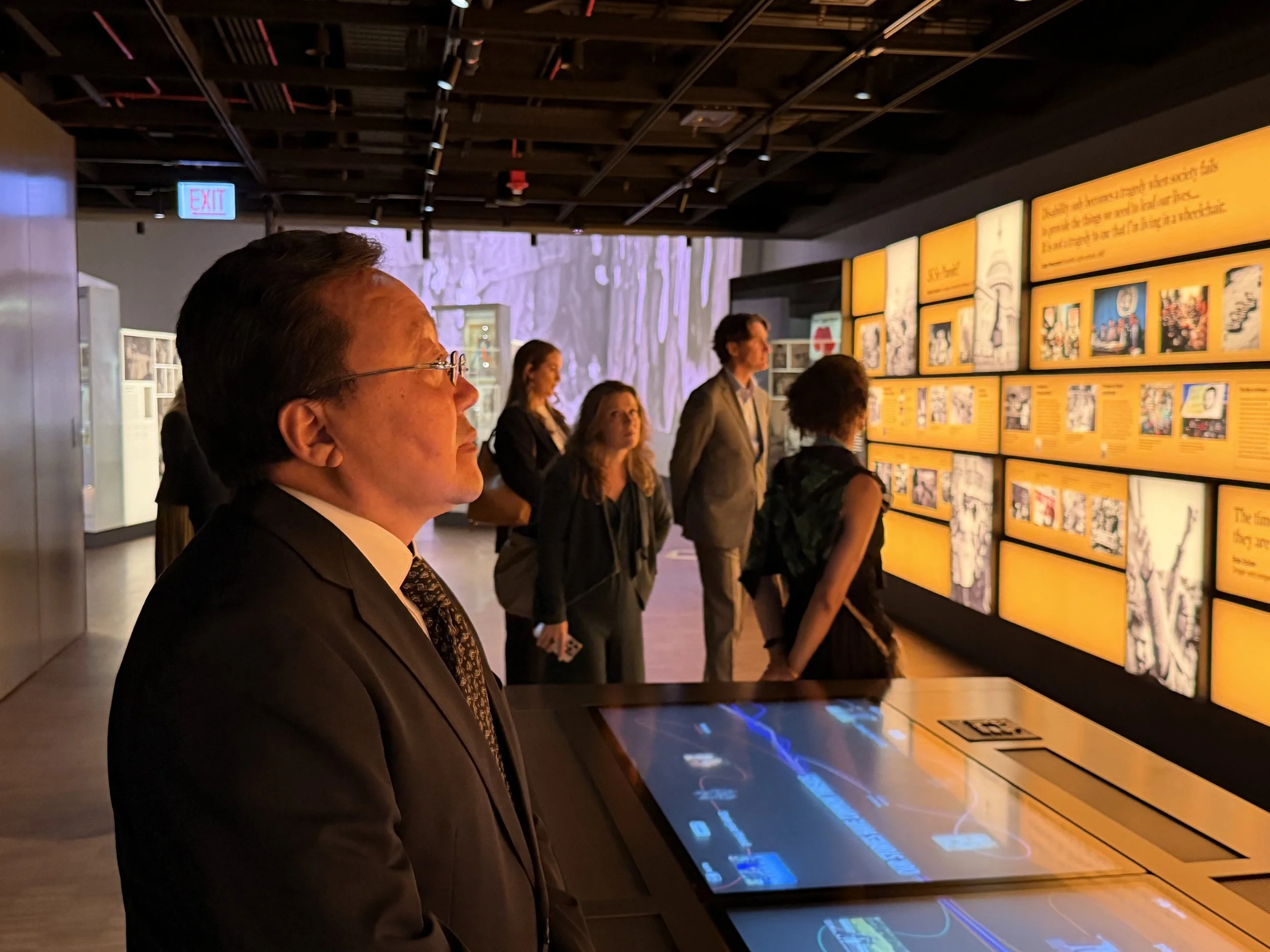
I was struck watching Elbegdorj move through the exhibits. He wasn’t consuming history as a spectator. He was studying how nations preserve memory.
Who gets to shape the narrative of a nation?
I have been thinking about this more and more lately.
And what fascinates me most is that I keep seeing the same idea show up in completely different rooms.
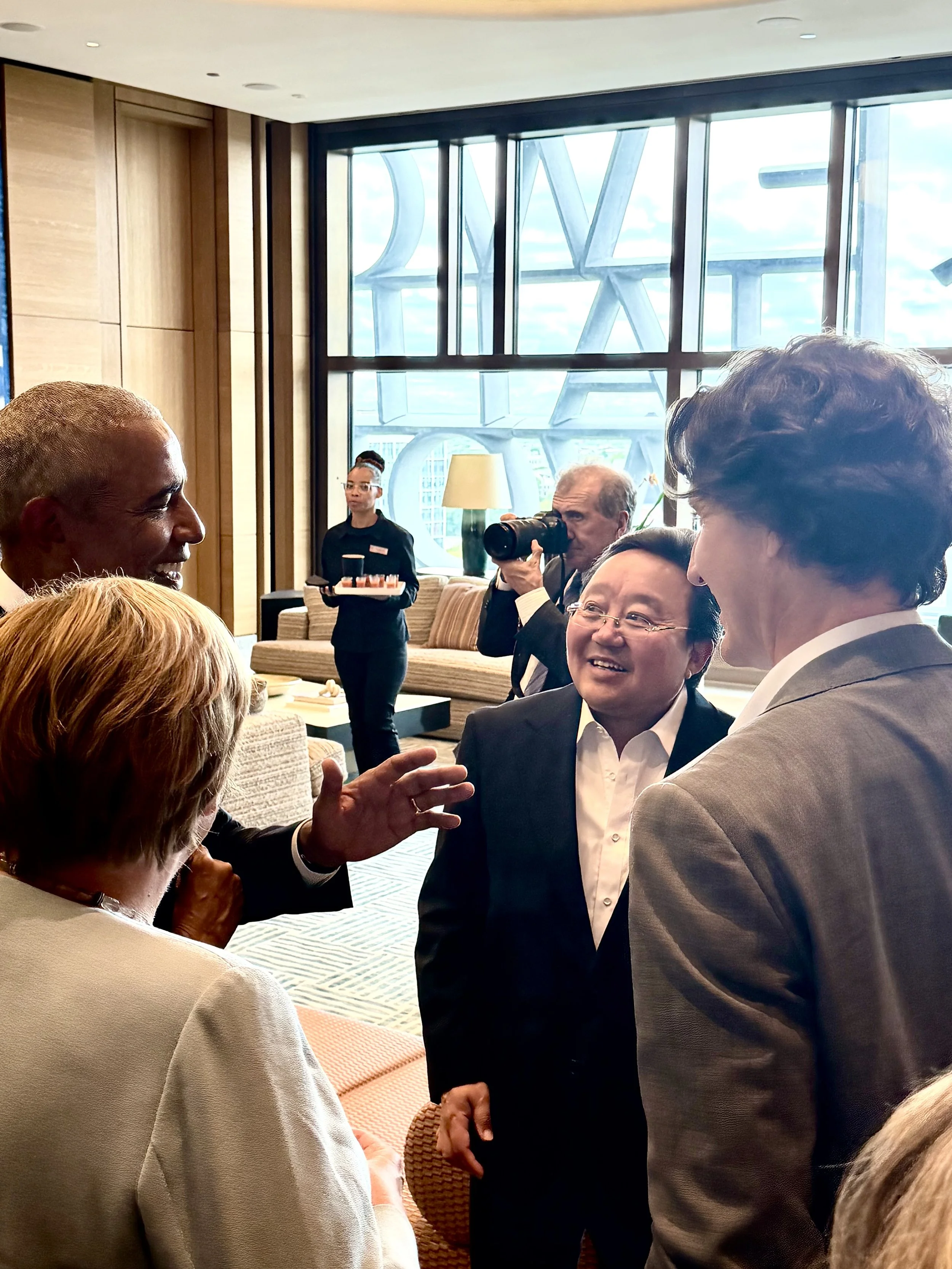
Leadership is often less about speaking and more about listening / Obama, Elbegdorj, Angela Merkel and Justin Trudeau post ceremony.
A museum board meeting.
A conversation with global tourism leaders.
A gathering of ambitious students.
A presidential center opening.
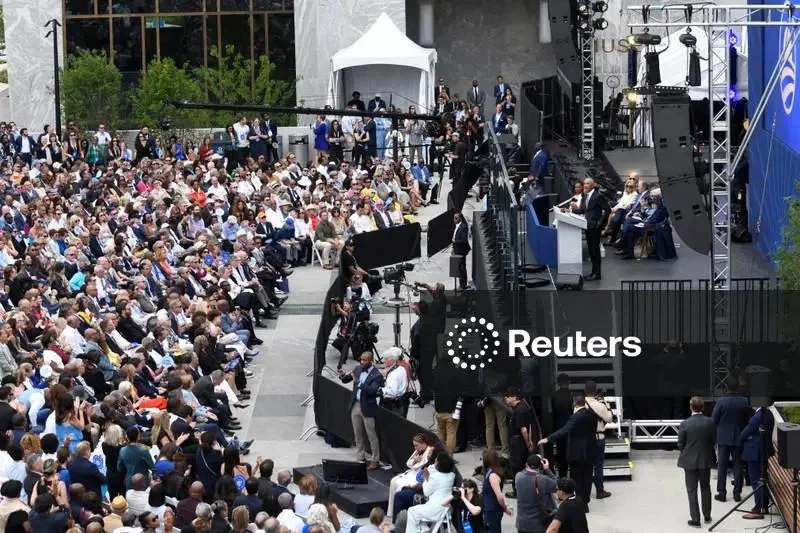
A packed crowd gathers for the opening of the Obama Presidential Center.
At first, these felt like separate conversations.
I no longer think they are.
President Obama spoke about the responsibility to inspire the future.
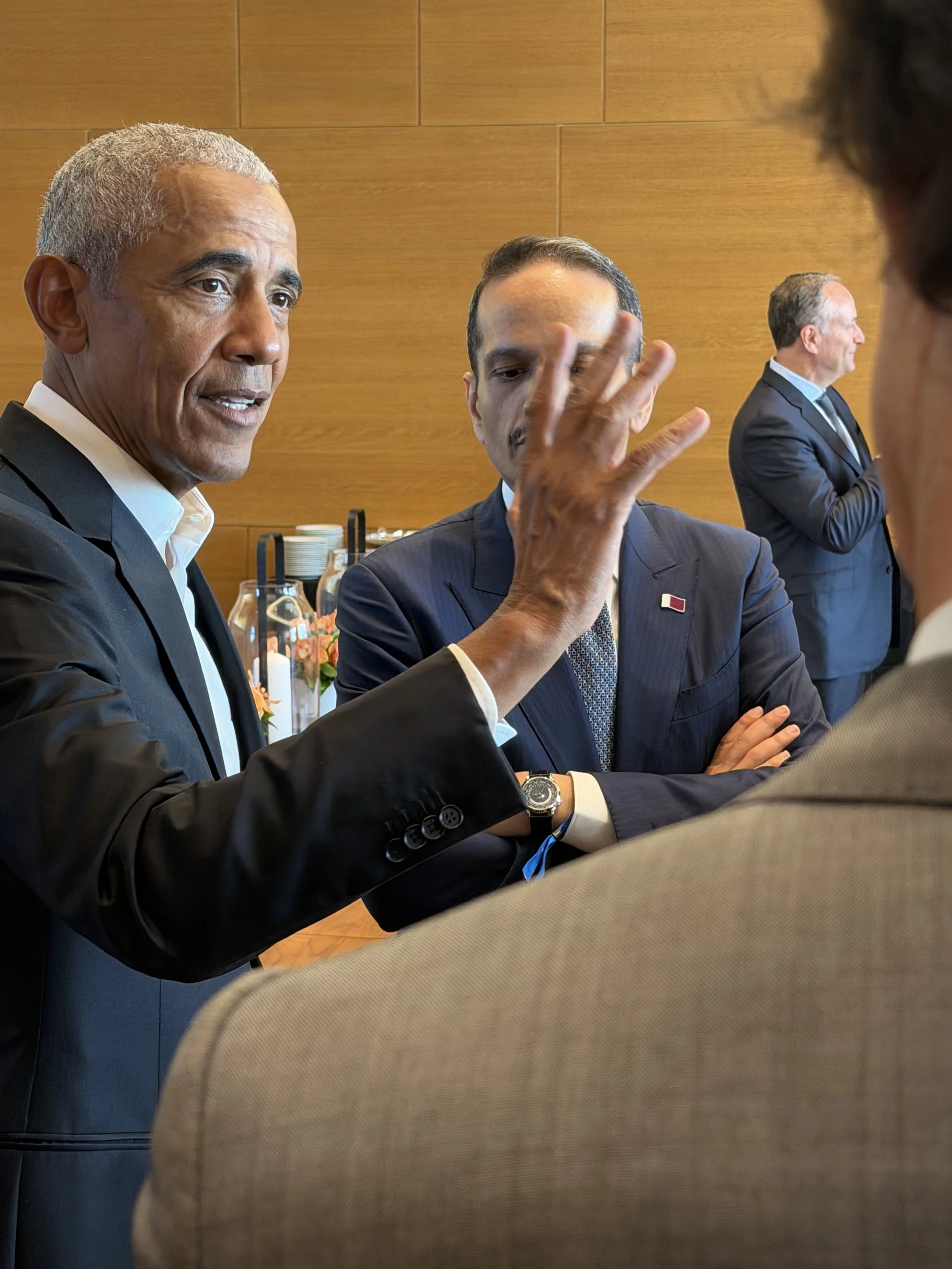
Obama continued conversations with international leaders after the ceremony.
That stayed with me.
Not just because of what he said, but because of where he said it.
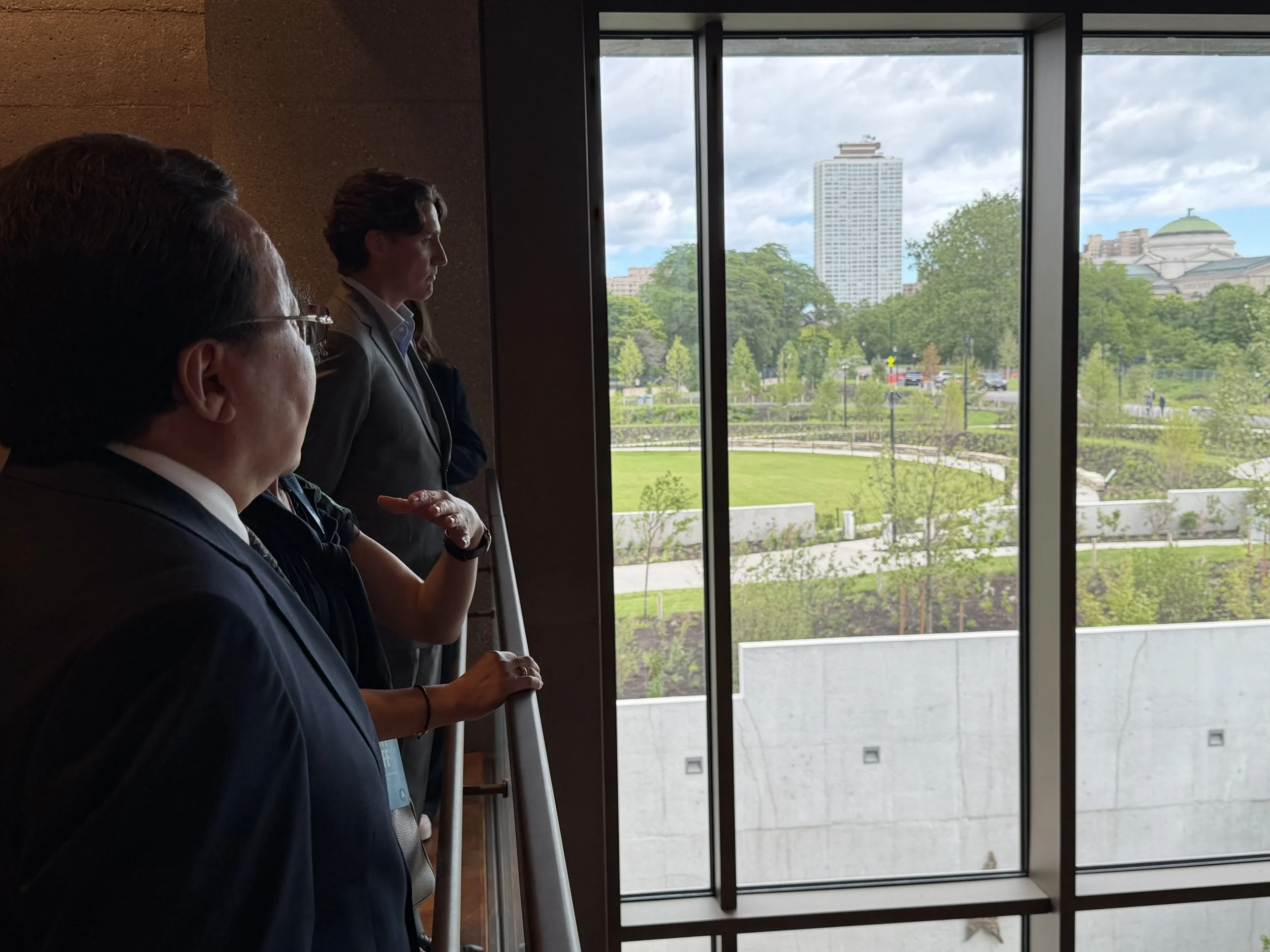
From inside the center, Jackson Park comes into view. The setting reinforces that national narratives are always rooted in real communities.
Chicago is a city with extraordinary talent, history, culture, and economic power. And yet, like many great cities, it also wrestles with narrative.
What story gets told about Chicago?
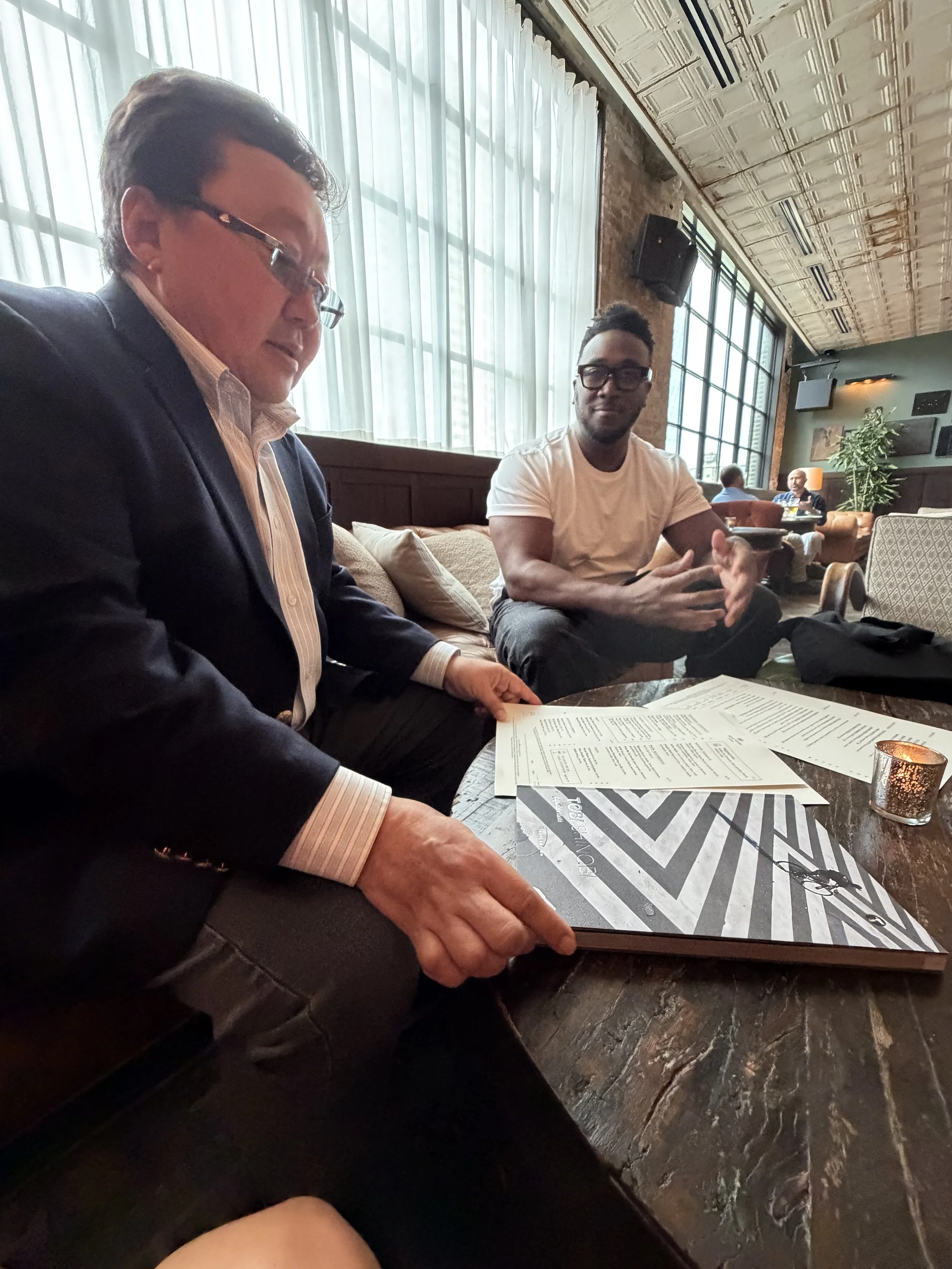
Artists document what history often misses. Elbegdorj with artist, Tobi Shinobi.
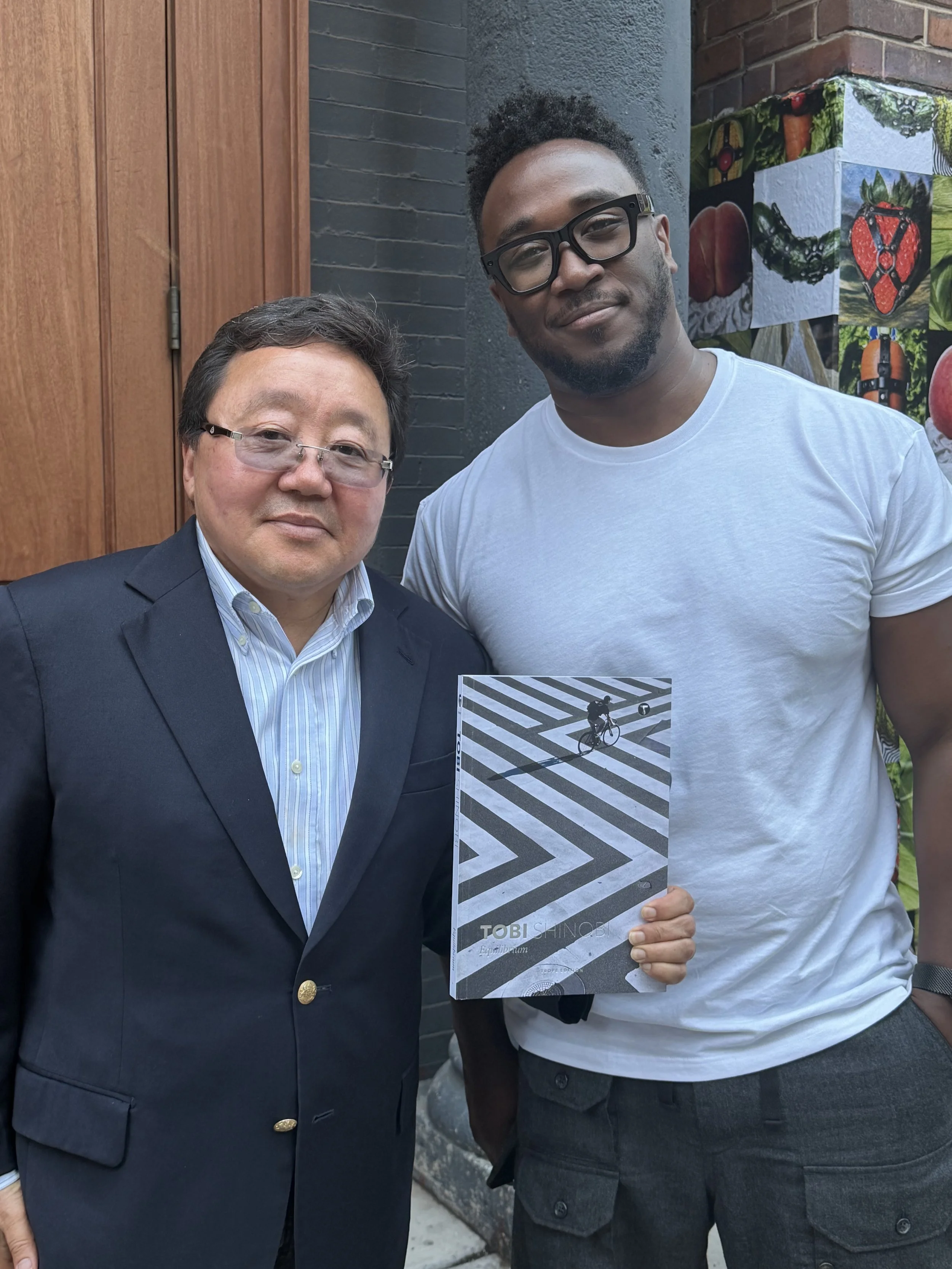
Who records the story matters almost as much as who lives it / Elbegdorj with Tobi Shinobi.
Who gets to tell it?
Those of us who live and work here know there is far more complexity, creativity, resilience, and possibility than headlines often capture.
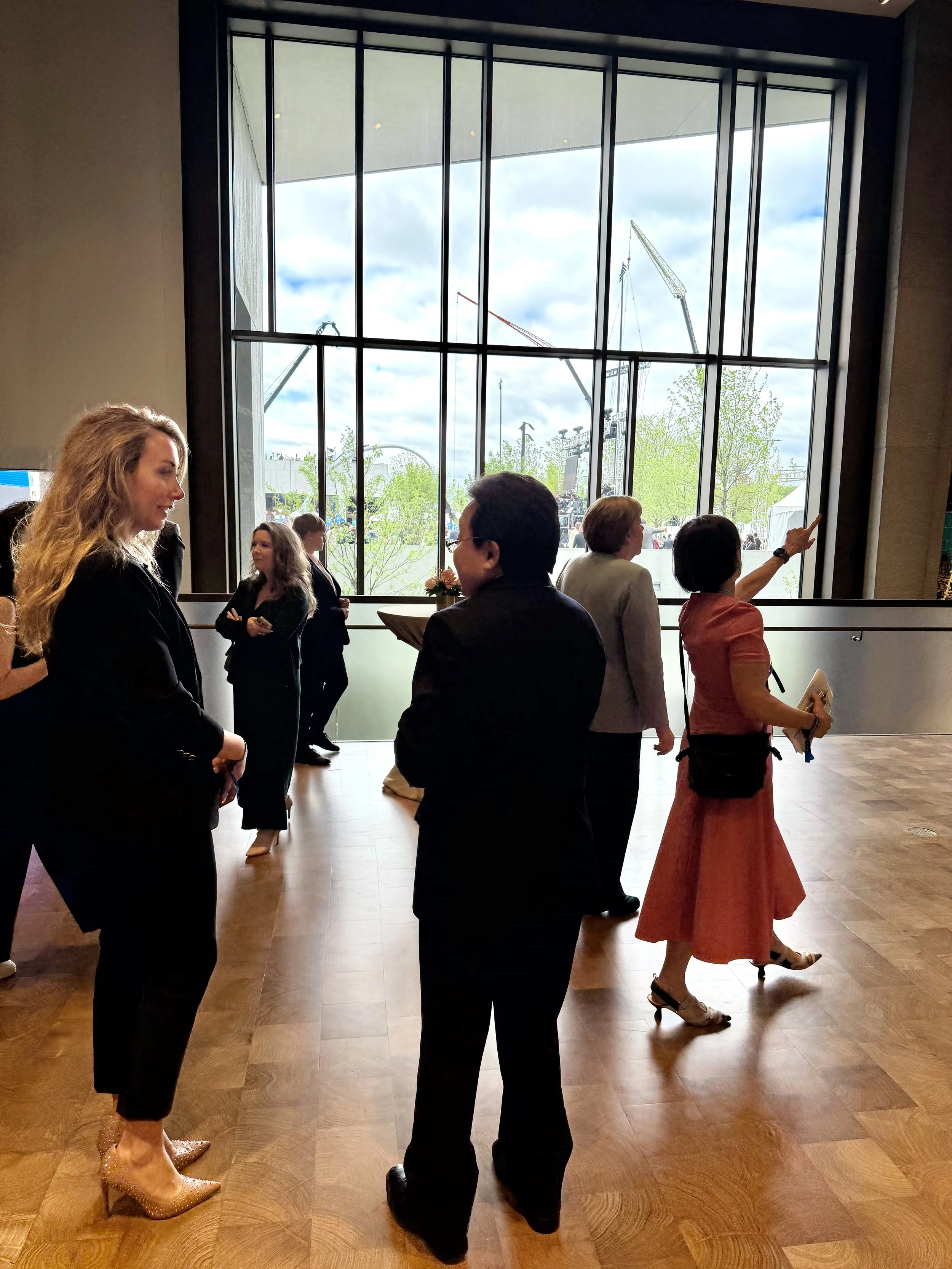
I appreciated that The Center’s design reflects the idea that national stories belong to everyone.
That felt deeply connected to the larger question I kept returning to throughout the day.
Because cities and nations are not shaped only by infrastructure, policy, or economics.
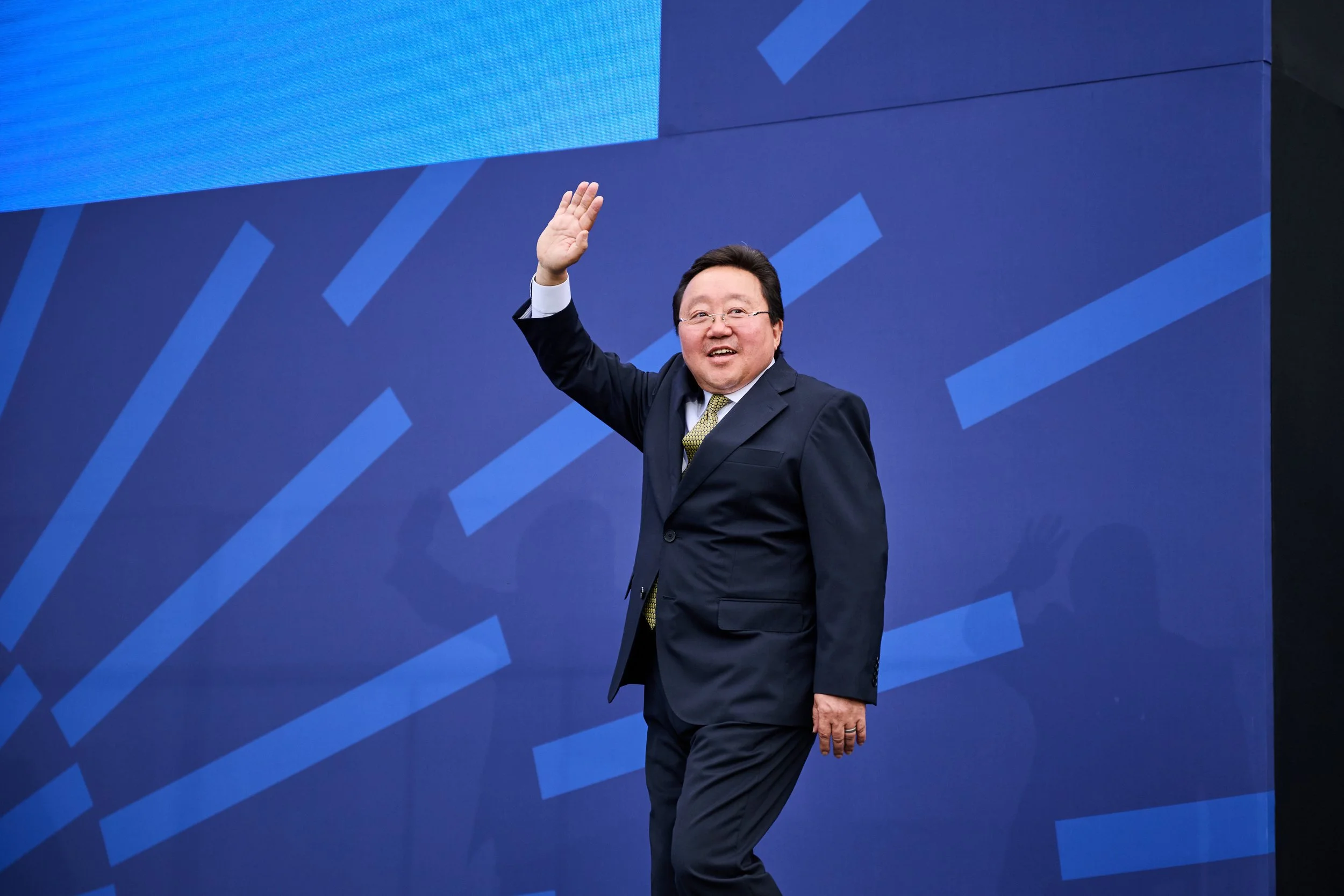
President Elbegdorj walked onto stage, reminding us that one voice can help reshape a nation’s future.
They are also shaped by aspiration.
By belief.
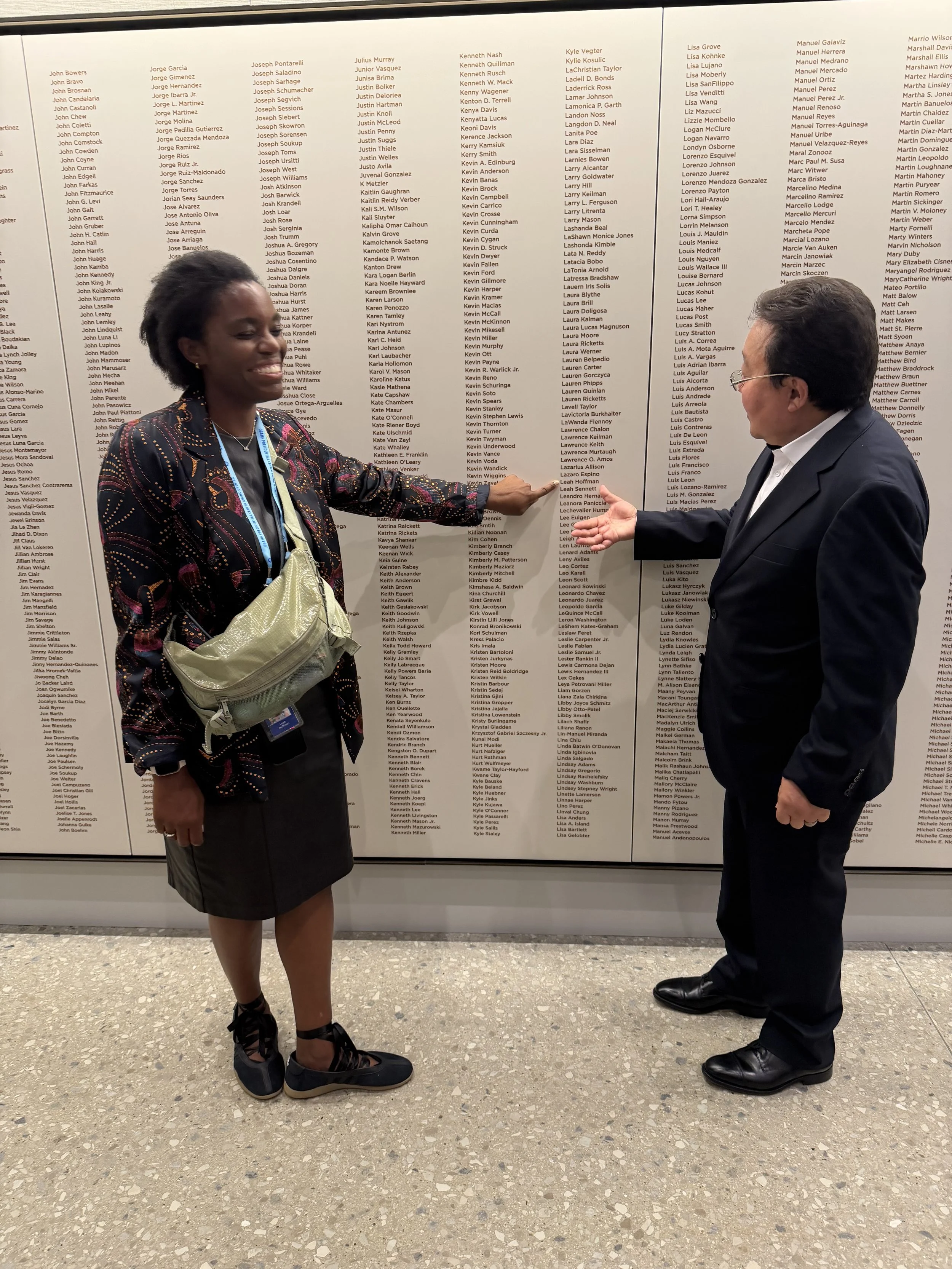
Leah Hoffman is part of an emerging generation asking not just what AI can do, but who it can empower.
By the people willing to imagine a better future and invite others into that vision.
That question has become even more compelling to me through my growing friendship with President Elbegdorj of Mongolia.
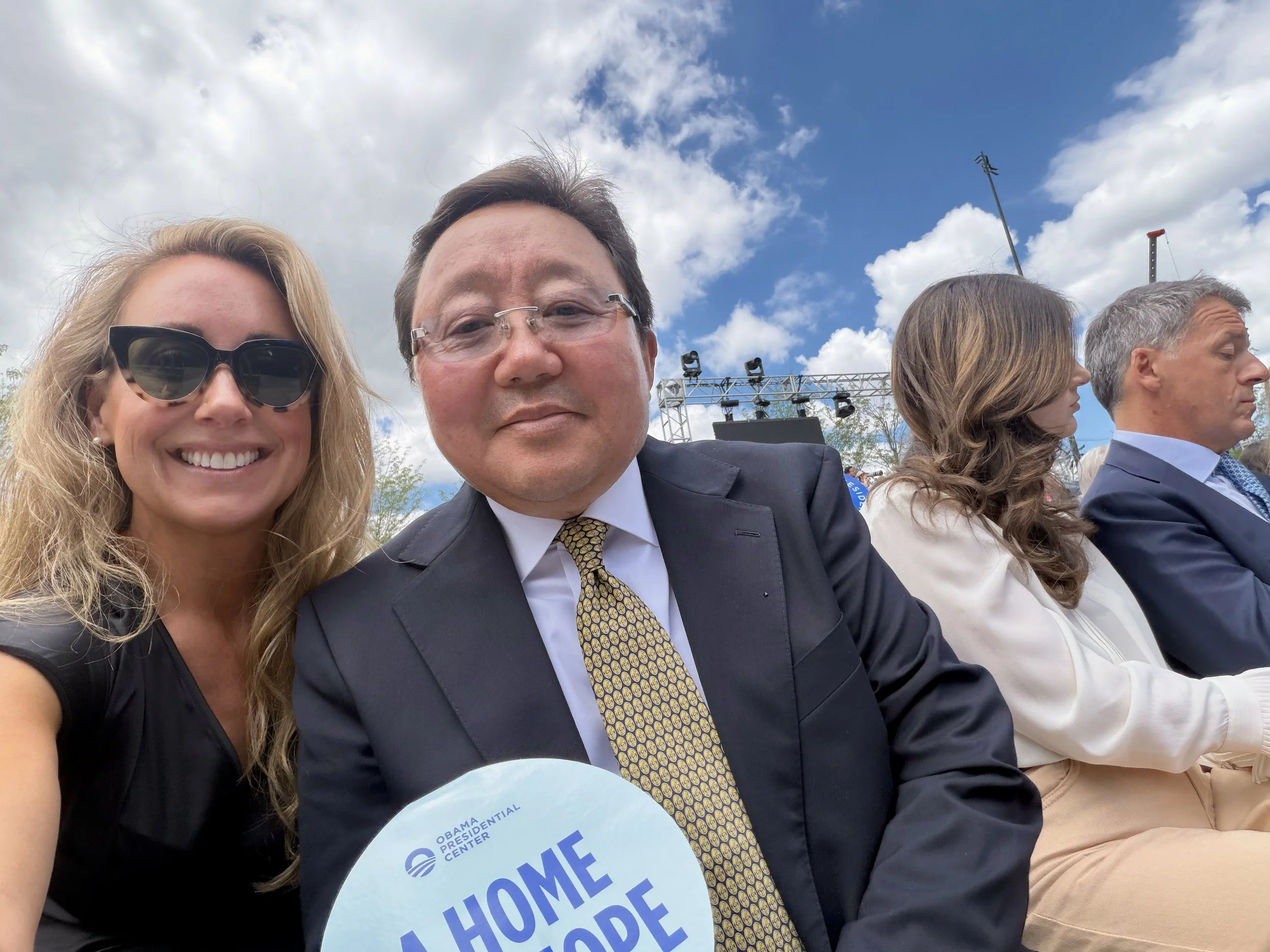
I didn’t feel I belonged in the front row amongst global leaders, EB jokingly said, “Just pretend, Laura!” and we shared many laughs.
Our conversations have challenged me to think beyond leadership in the traditional sense.
Not simply about policy or governance.
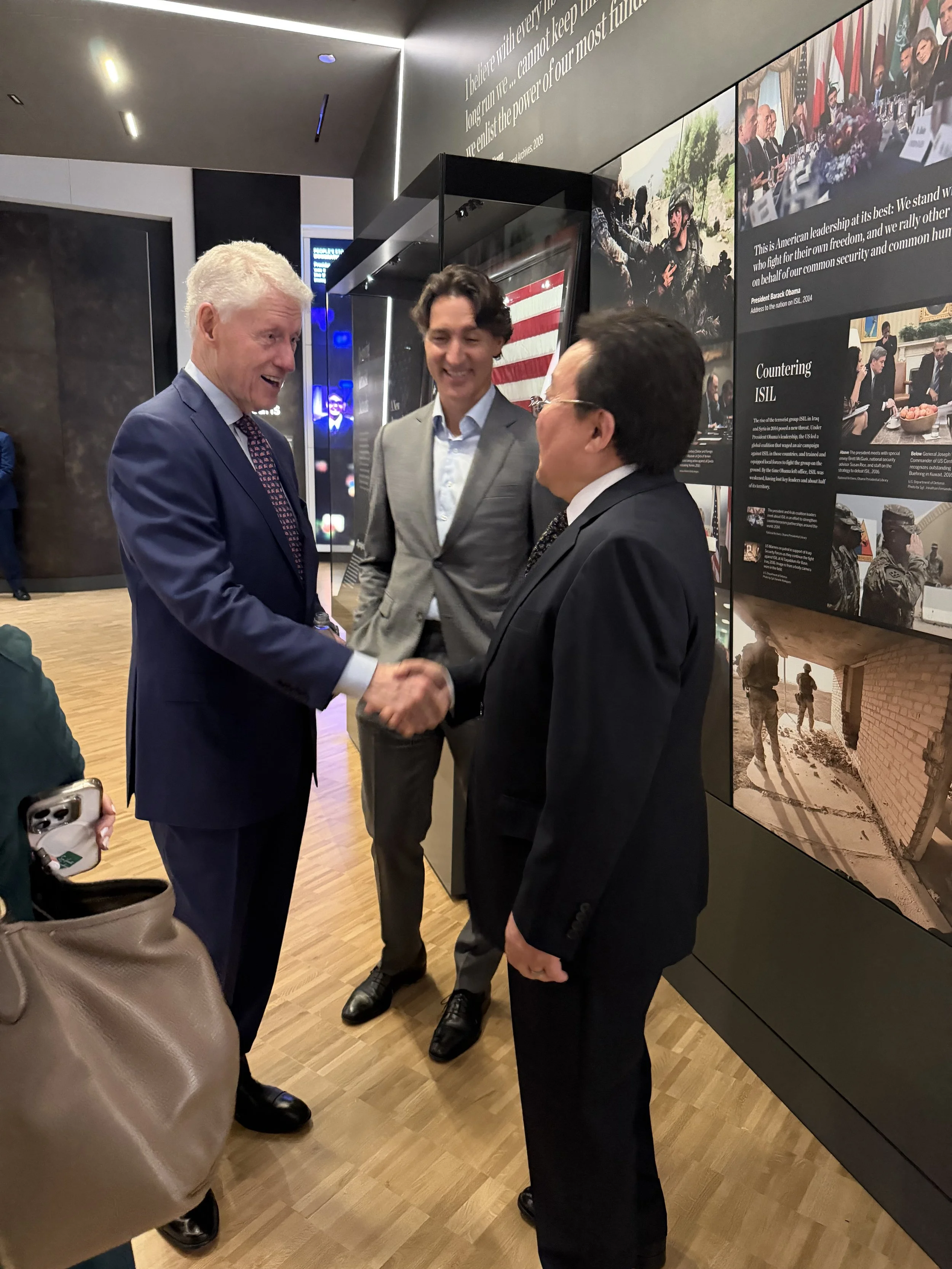
The two presidents joy was striking. A reminder that leadership is deeply human. / Clinton, Trudeau and Elbegdorj.
But about story.
About perception.
About what the world believes to be true about a place and the people who call it home.
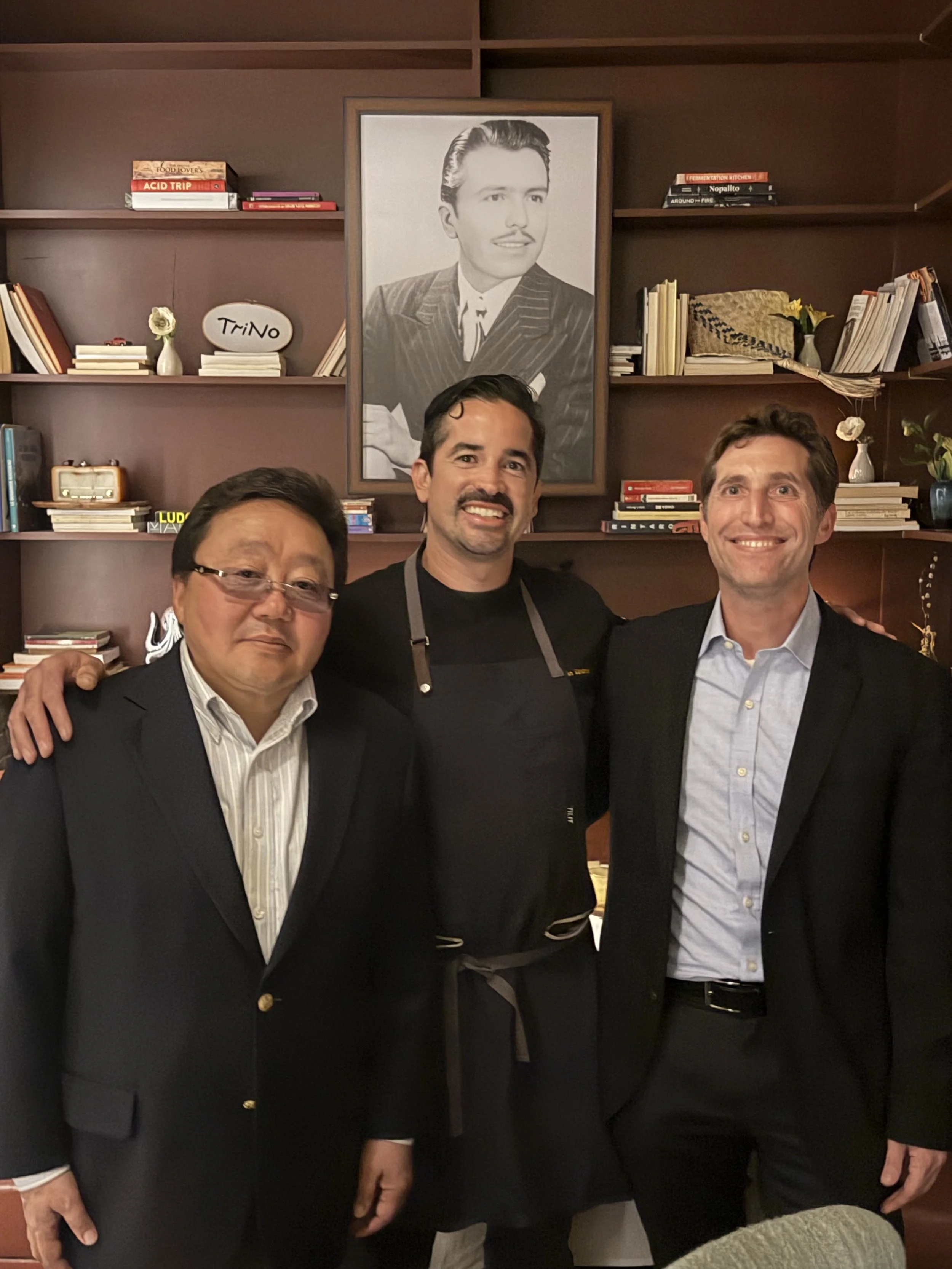
Food has always been one of civilization’s oldest forms of trust-building. EB dines with, Jonathan Yaffe, of Empire Tours and Productions hosted by chef, Stephan Sandoval
When we think about the story of a country, we often assume it is shaped by presidents, prime ministers, policy, or the media.
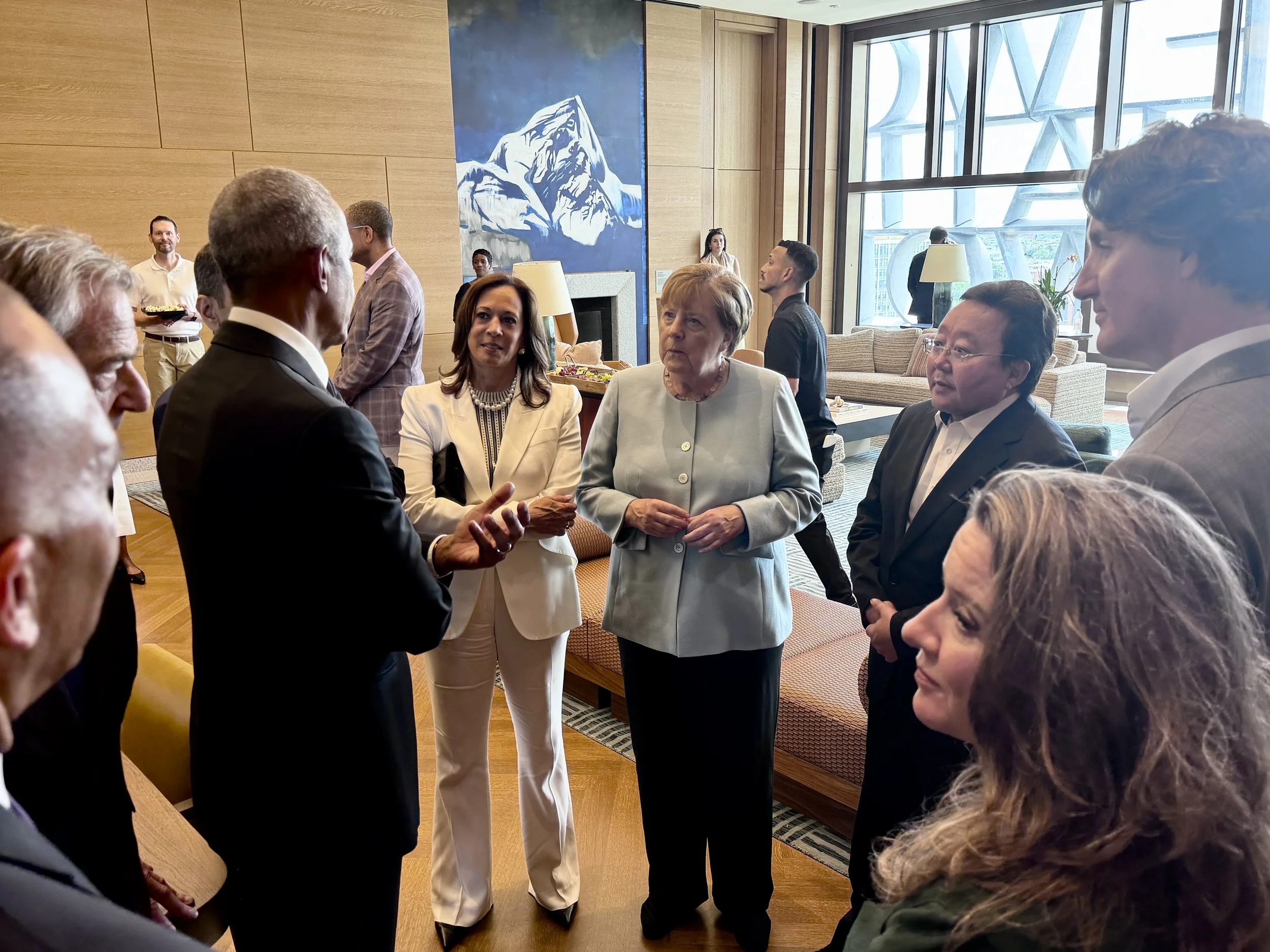
Obama, Harris, Merkel, Elbegdorj and Trudeau post ceremony.
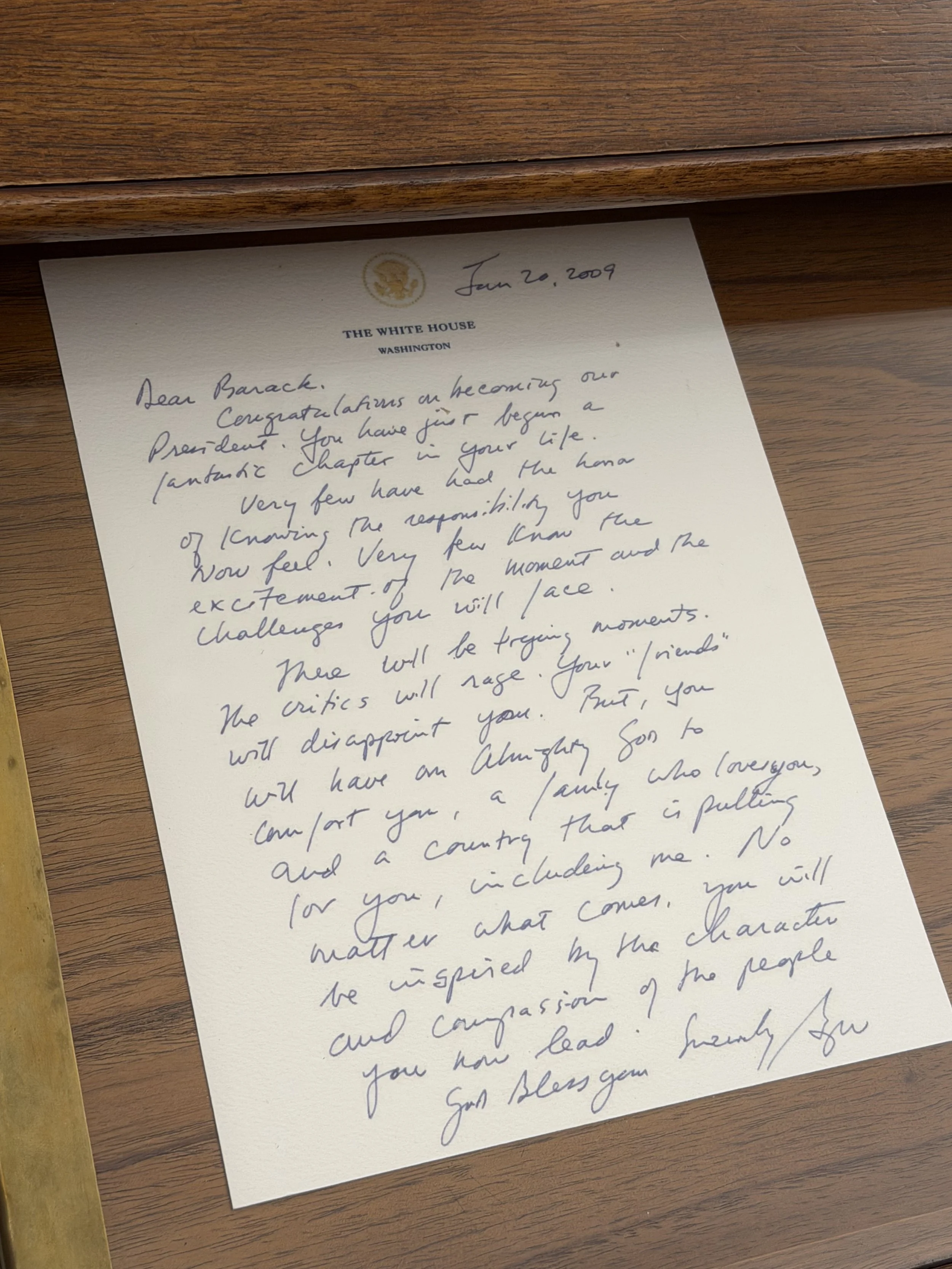
Nations are shaped not only by power, but by how power is handed from one steward to the next. A letter to Barack Obama from George W. Bush.
But I am no longer convinced that is the whole story.
Nations are shaped by something much harder to see.
They are shaped by storytellers.
By artists.
By entrepreneurs.
By educators.
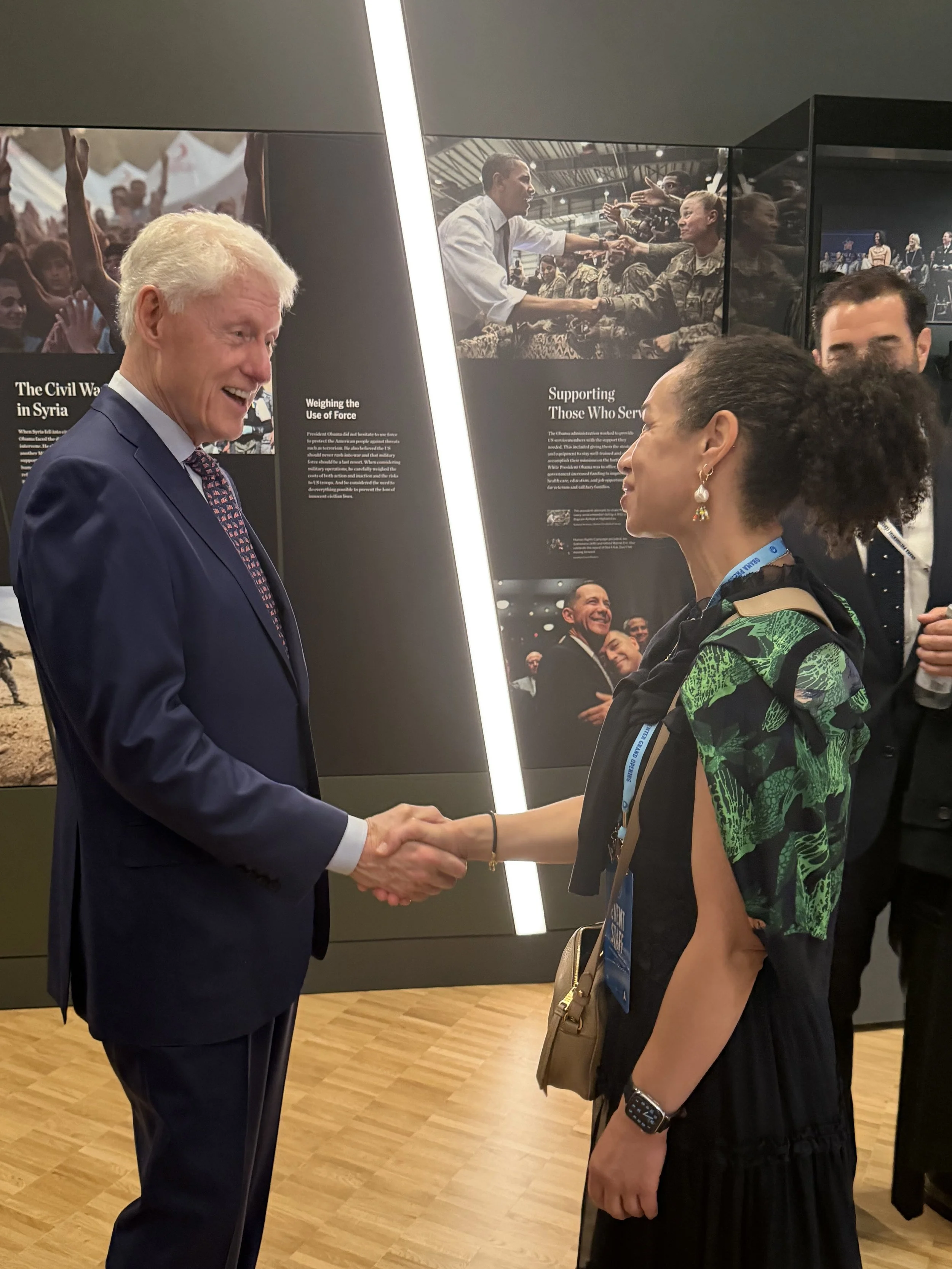
Clinton meets Dr. Louise Bernard who helped shape the museum’s curatorial vision, using art to connect history, leadership, and civic imagination.
By technologists.
By students.
By tourism.
By the people who decide what gets preserved, what gets shared, and what the rest of the world is invited to experience.
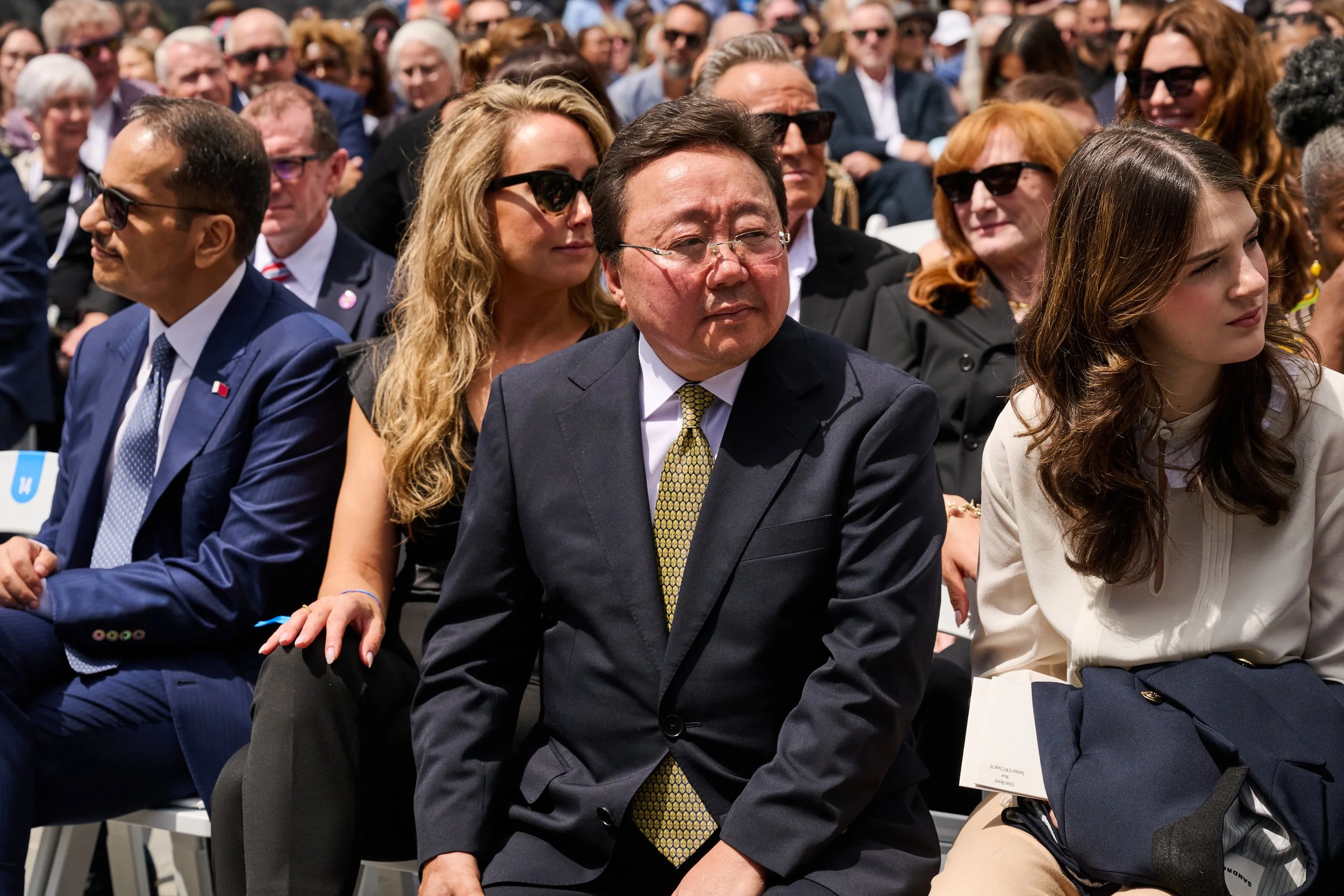
I watched as EB took thoughtful notes, obviously moved by the moment.
And yet, despite the extraordinary history carried by so many nations, much of it remains unseen by the outside world.
Maybe not for lack of curiosity.
So we have to ask a deeper question: what actually changes a narrative?
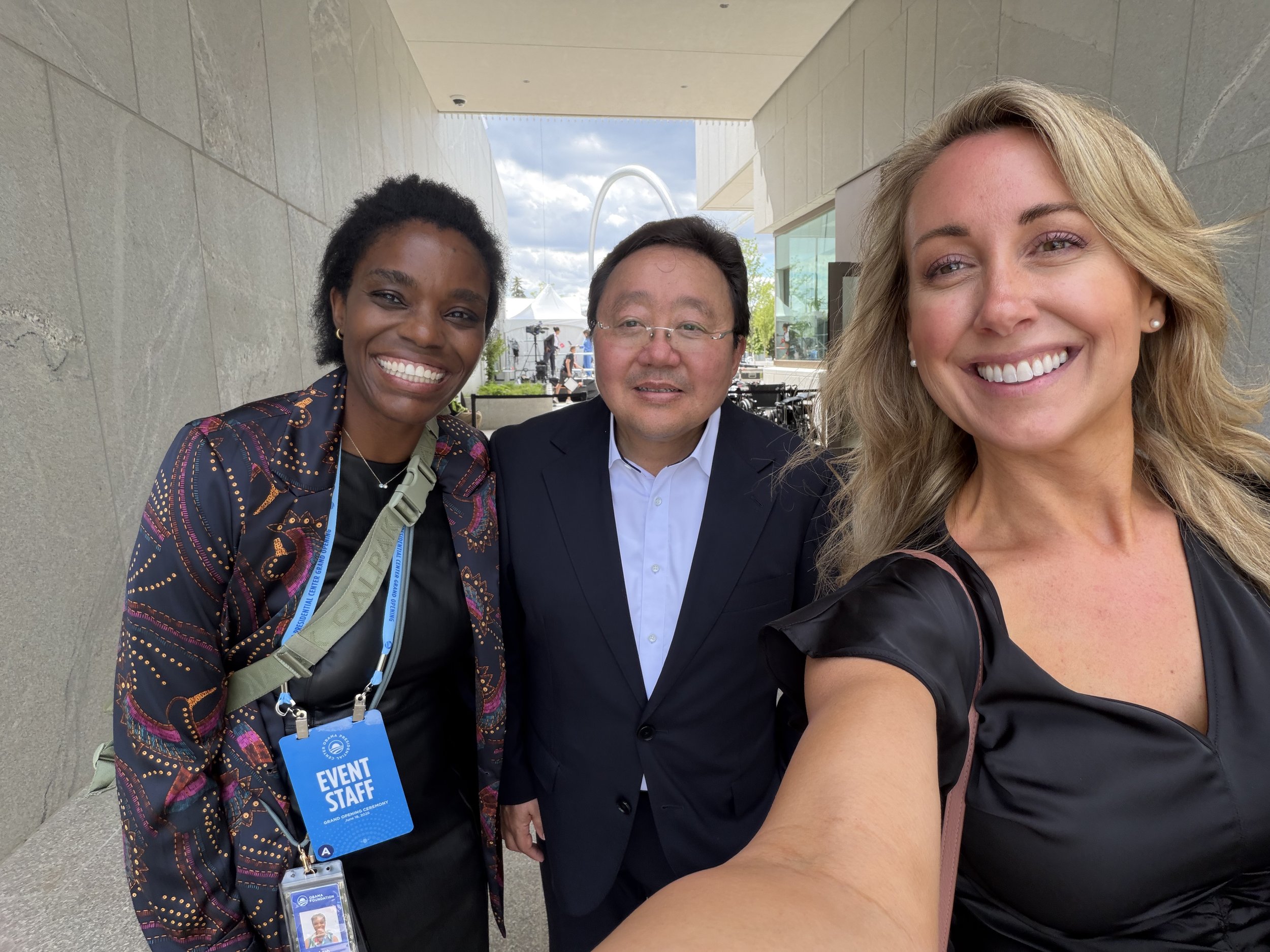
This photo captures something I felt all day: the future will be built through unlikely connections. Leah Hoffman, President Elbegdorj and I.
Take the FIFA World Cup. People from around the world are not just hearing about America, they are experiencing her for themselves. Perhaps they are encountering a story they were never told before. As America approaches her 250th birthday, that feels especially meaningful.
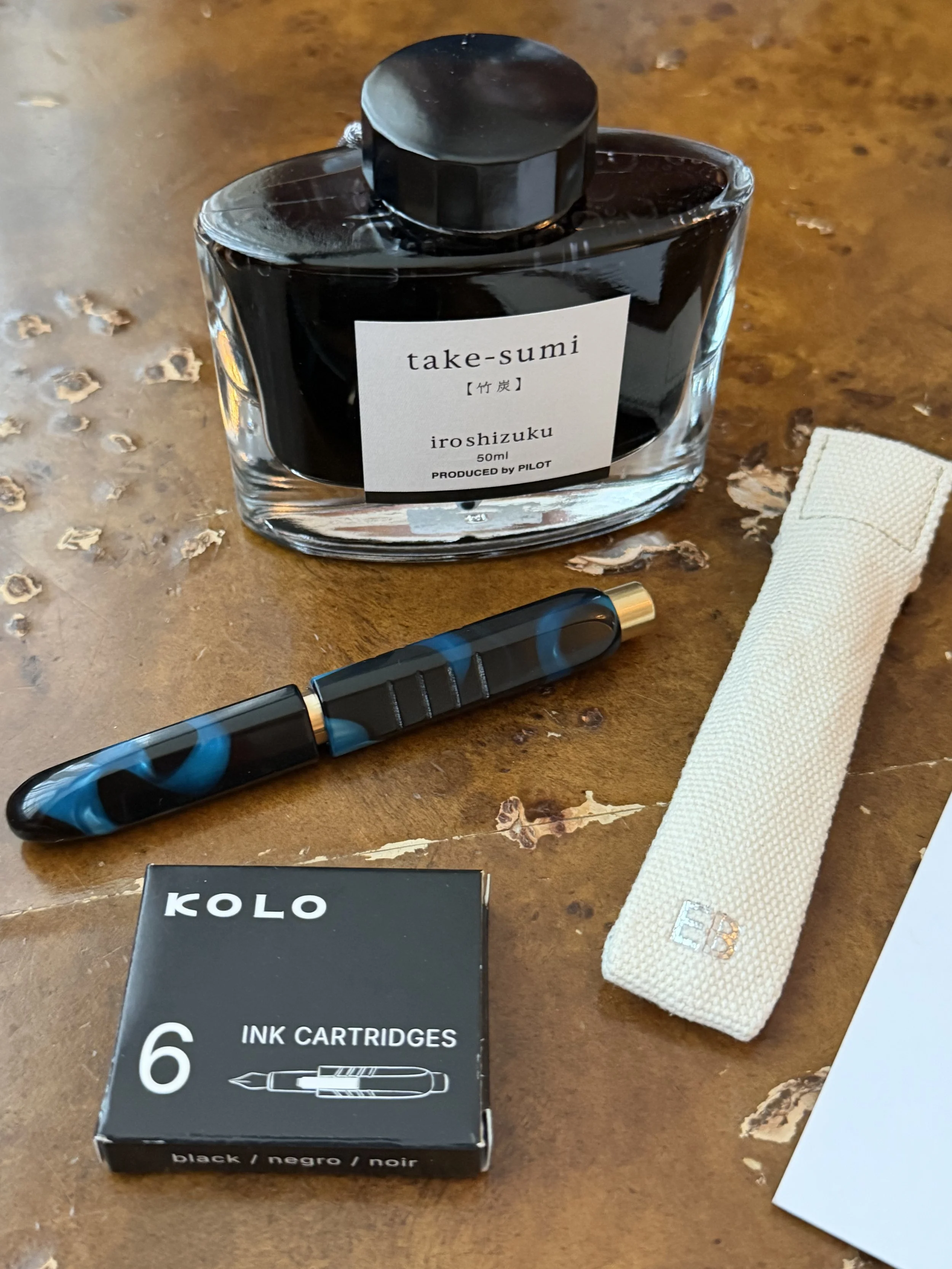
Genghis Khan and the Making of the Modern World is full of examples showing that writing and record-keeping—not just warfare—were central to Mongol power. Jack Weatherford makes a striking argument: Genghis Khan understood that the pen could outlast the sword. / A gift from Top Drawer
The narrative is no longer controlled by a few voices. It is being shaped in real time through shared experience.
You can feel something shifting.
But when there is no global event compelling people to gather, what then?
What else has the power to reshape how we see one another?
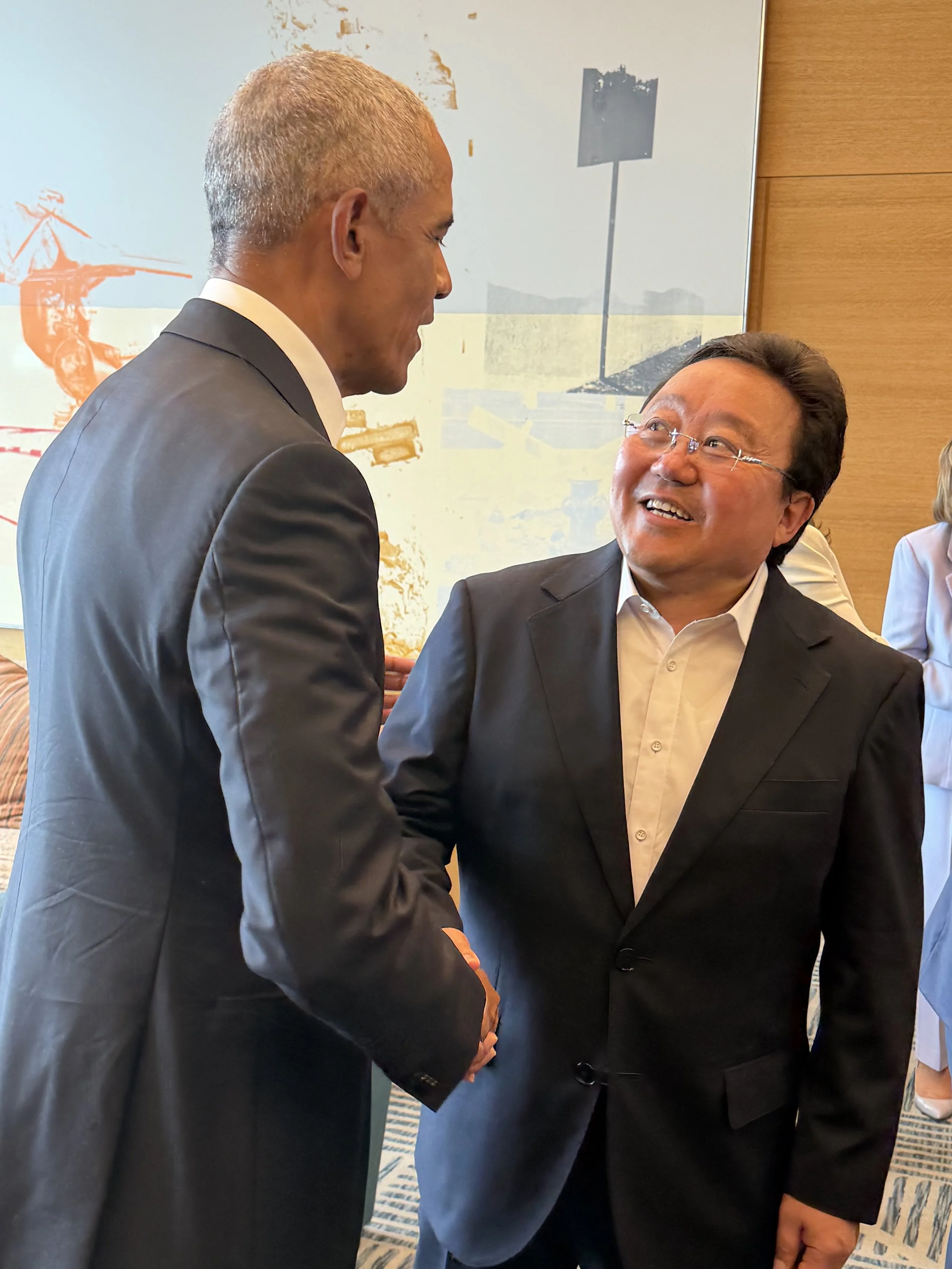
Joy may be leadership’s most underrated strengths. / Obama and Elbegdorj
There is a growing curiosity about Mongolia, a nation that can feel both impossibly far away and strangely familiar in its humanity. It is a country that has embraced modern technology, built one of the world’s highest literacy rates, and developed a highly educated bilingual population, all while preserving an ancient cultural identity and way of life that has endured for centuries.
President Elbegdorj has become one of the clearest voices helping bring that story back into global consciousness. He, too, could spark a global moment of change.
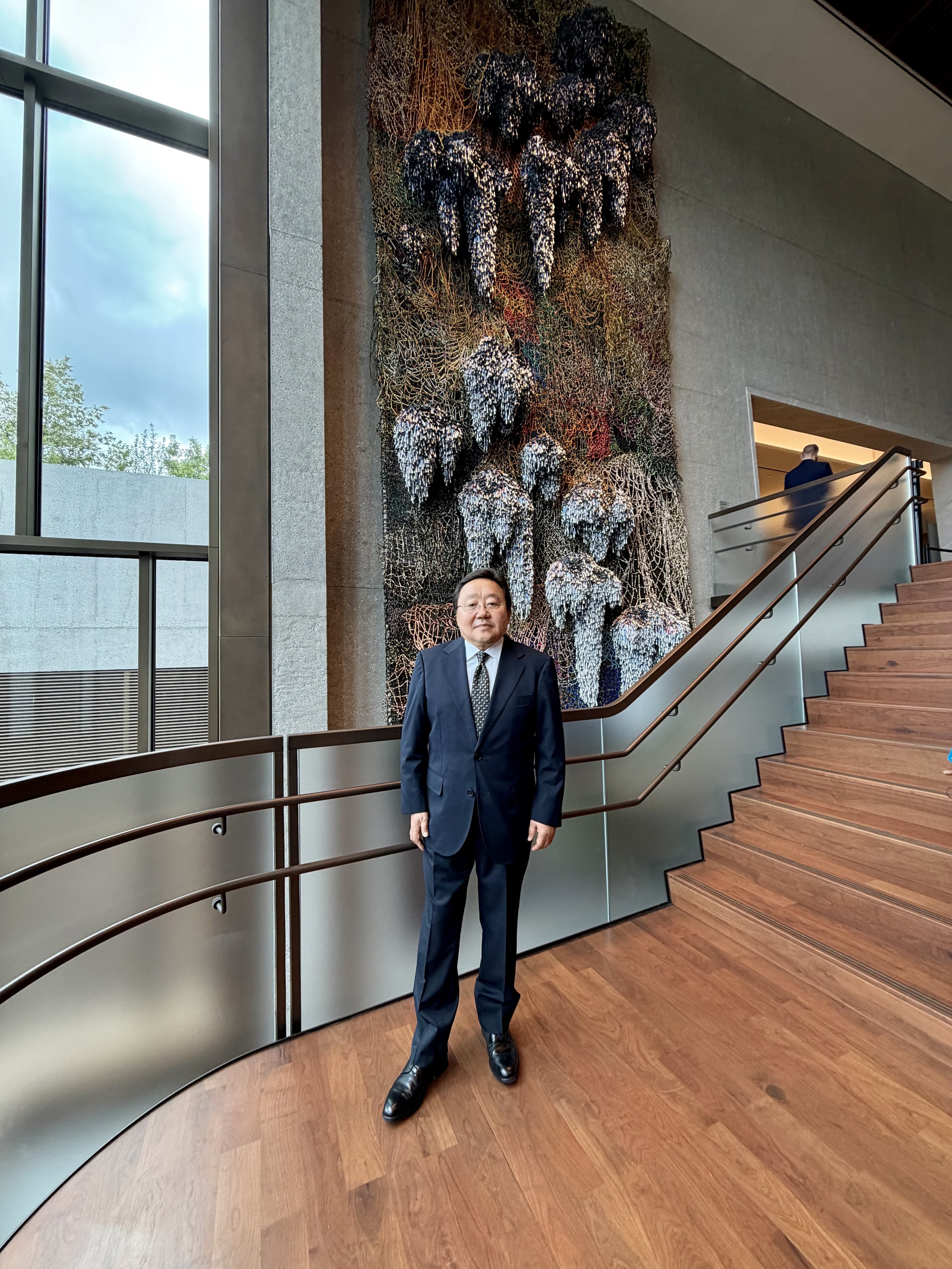
The monumental work behind President Tsakhiagiin Elbegdorj is This Land, Shared Sky, a collaboration between artists Nick Cave and Marie Watt.
When we first met, he warmly told me, “Please call me EB.”
It is an unexpectedly disarming introduction for a former president.
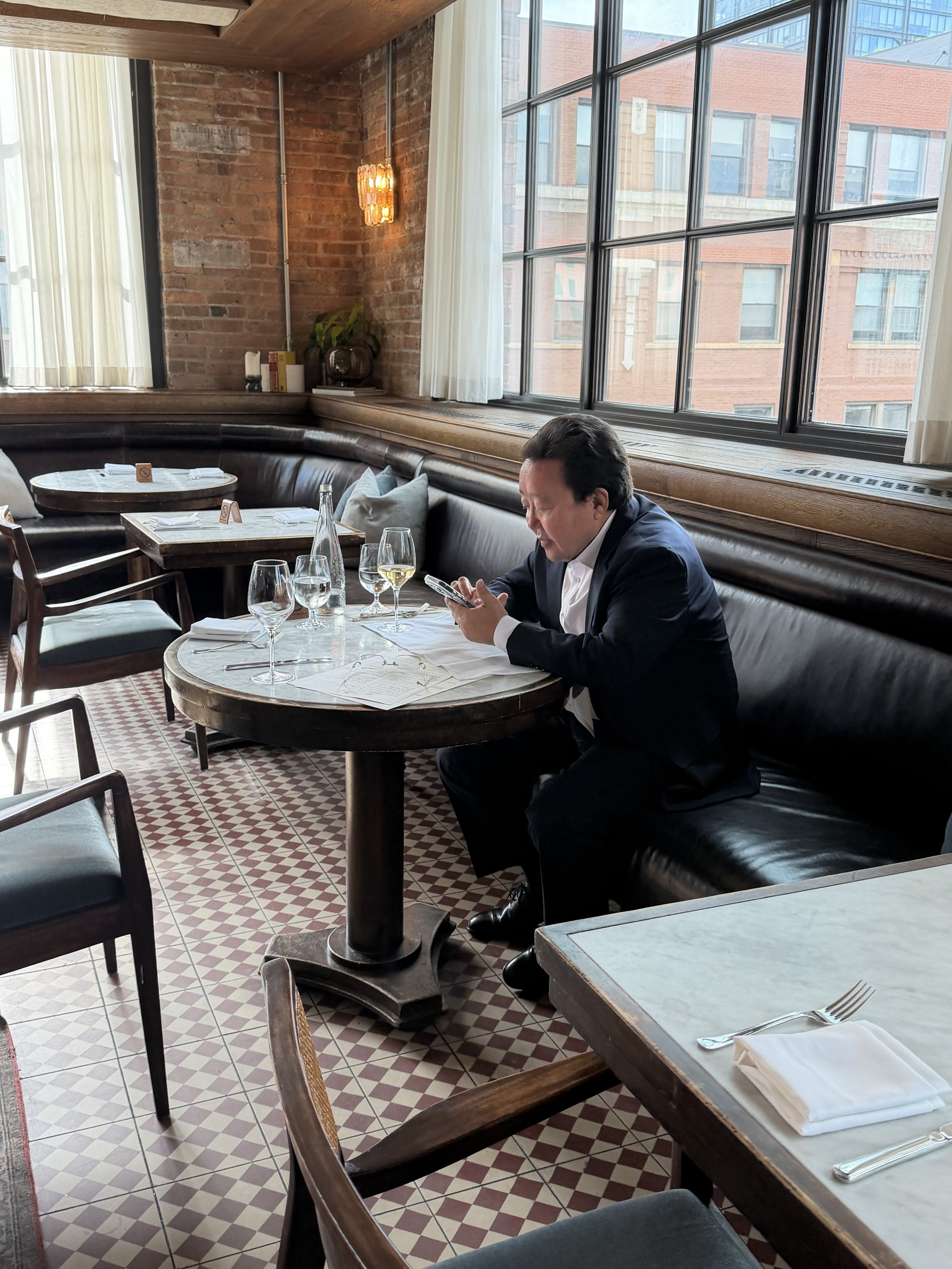
In between moments with EB, both thoughtful and optimistic.
EB began his career as a journalist and freedom fighter, helping organize peaceful democratic protests that moved Mongolia away from communism and toward democracy. The more I understood his story, the more something became clear to me.
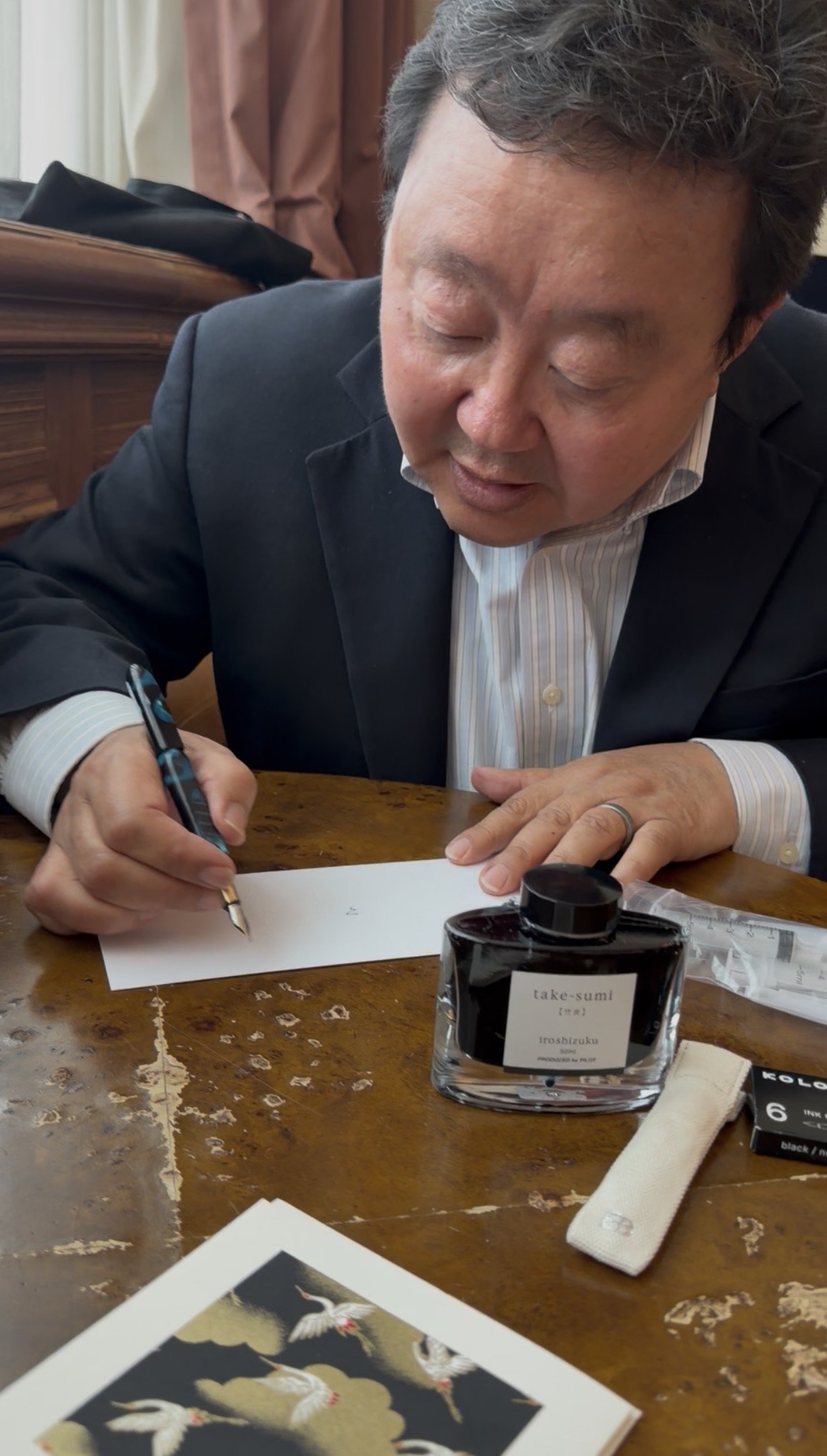
Top Drawer’s pen and ink encouraged EB’s thoughts and words to flow.
His story is not only Mongolia’s story.
It is a human story.
It is the story of a young freedom fighter who believed ordinary people could shape the future of a nation.
And as I watched him move through rooms filled with former presidents and global leaders, something else stood out.
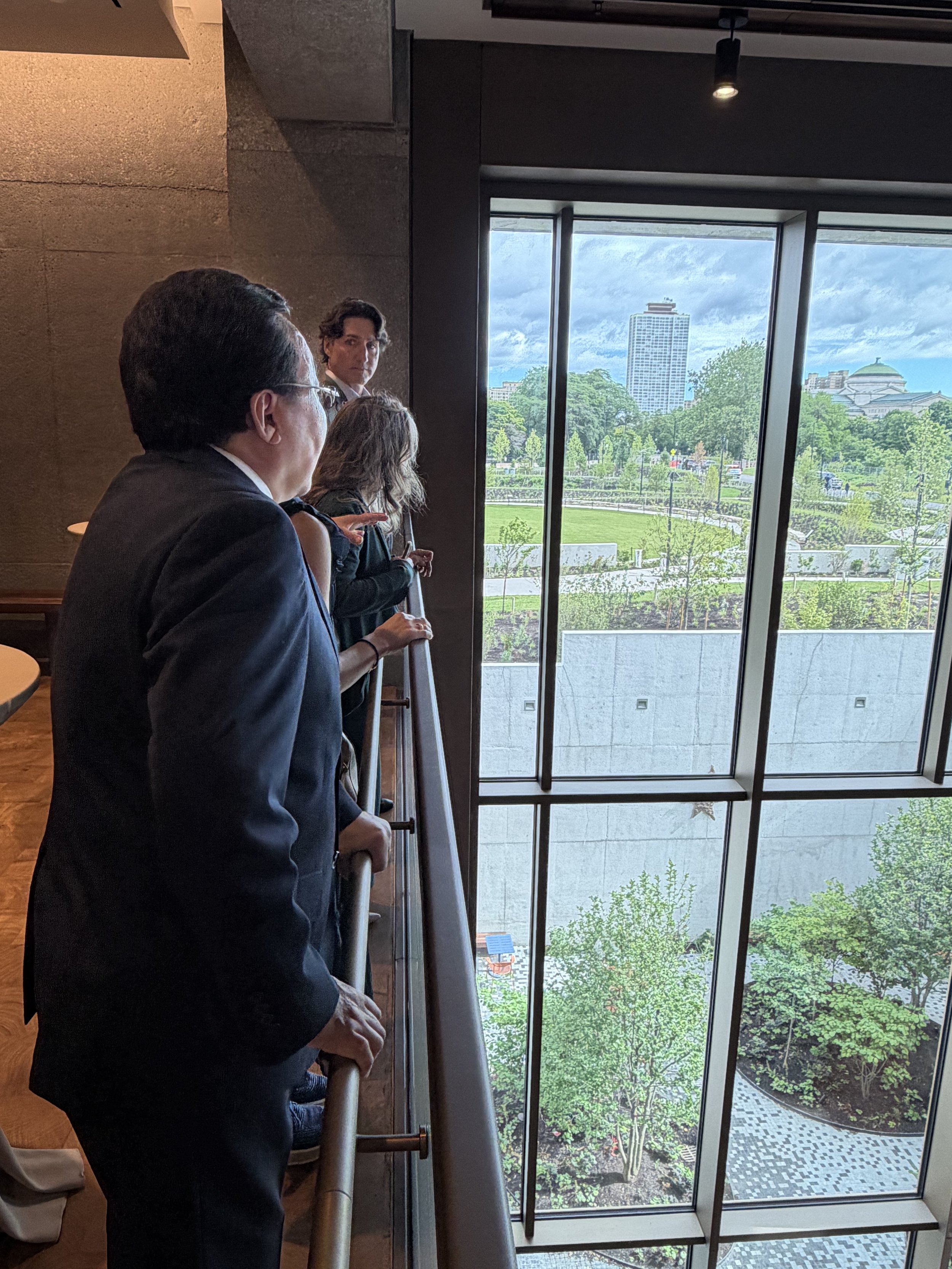
EB’s optimistic perspective sees Chicago full of potential, especially this view of Lake Michigan.
He never stopped making time for people whose stories might otherwise be overlooked.
Even in rooms built around power and influence, he remained deeply curious about the people around him, listening to chefs, staff, and everyday individuals with the same attentiveness he gave world leaders.
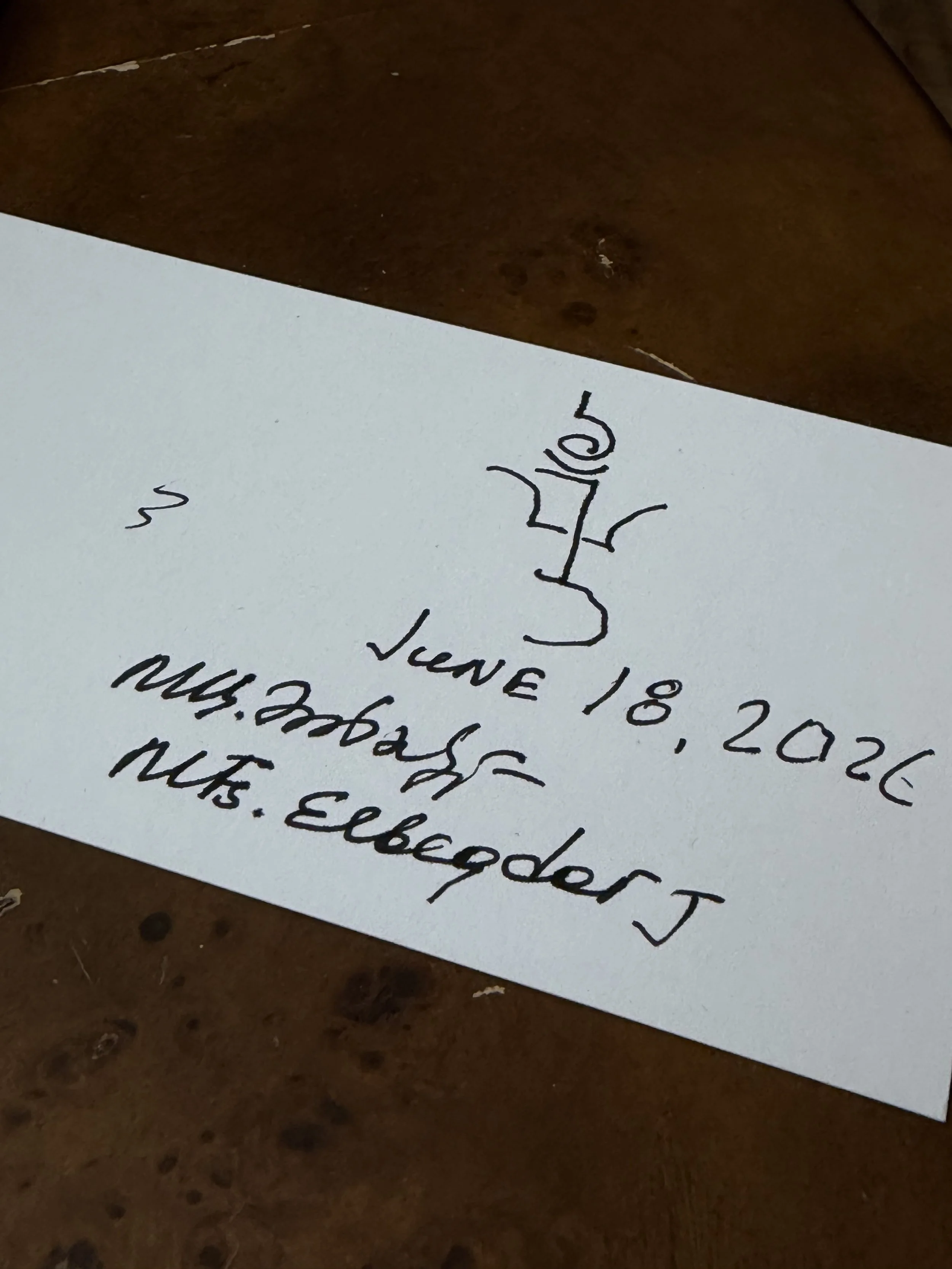
A handwritten note from EB in traditional Mongolian script, a quiet reminder that language itself carries history, identity, and memory.
That stayed with me.
Because perhaps the people best suited to shape the narrative of a nation are the ones who never stop listening to the people who live inside it.
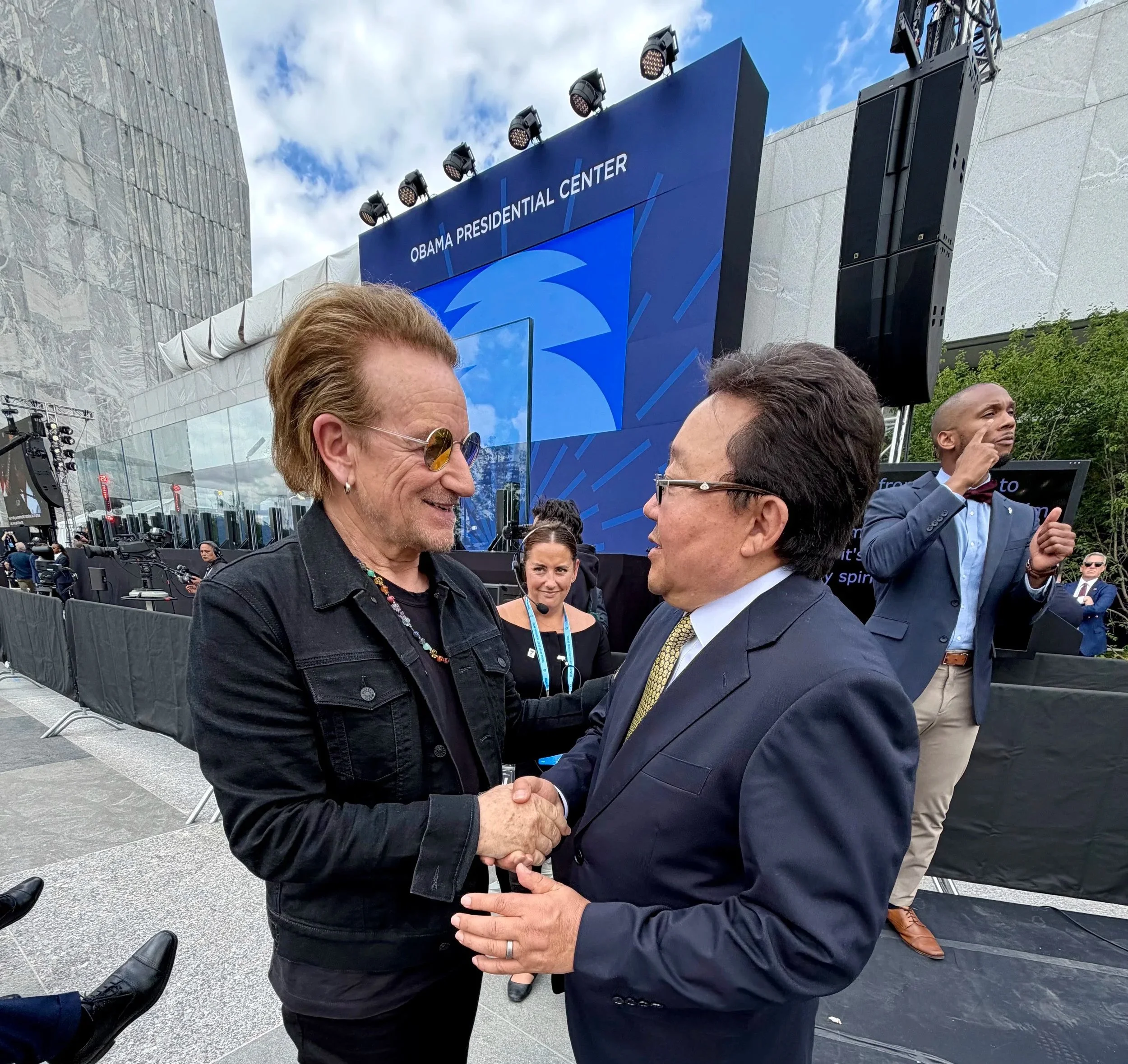
Bono’s warm greeting to all the international guests, especially EB was endearing.
Recently, I sat with tourism innovators working with cities and governments around the world.
Their work goes far beyond tours or ticket sales.
They are asking much bigger questions.
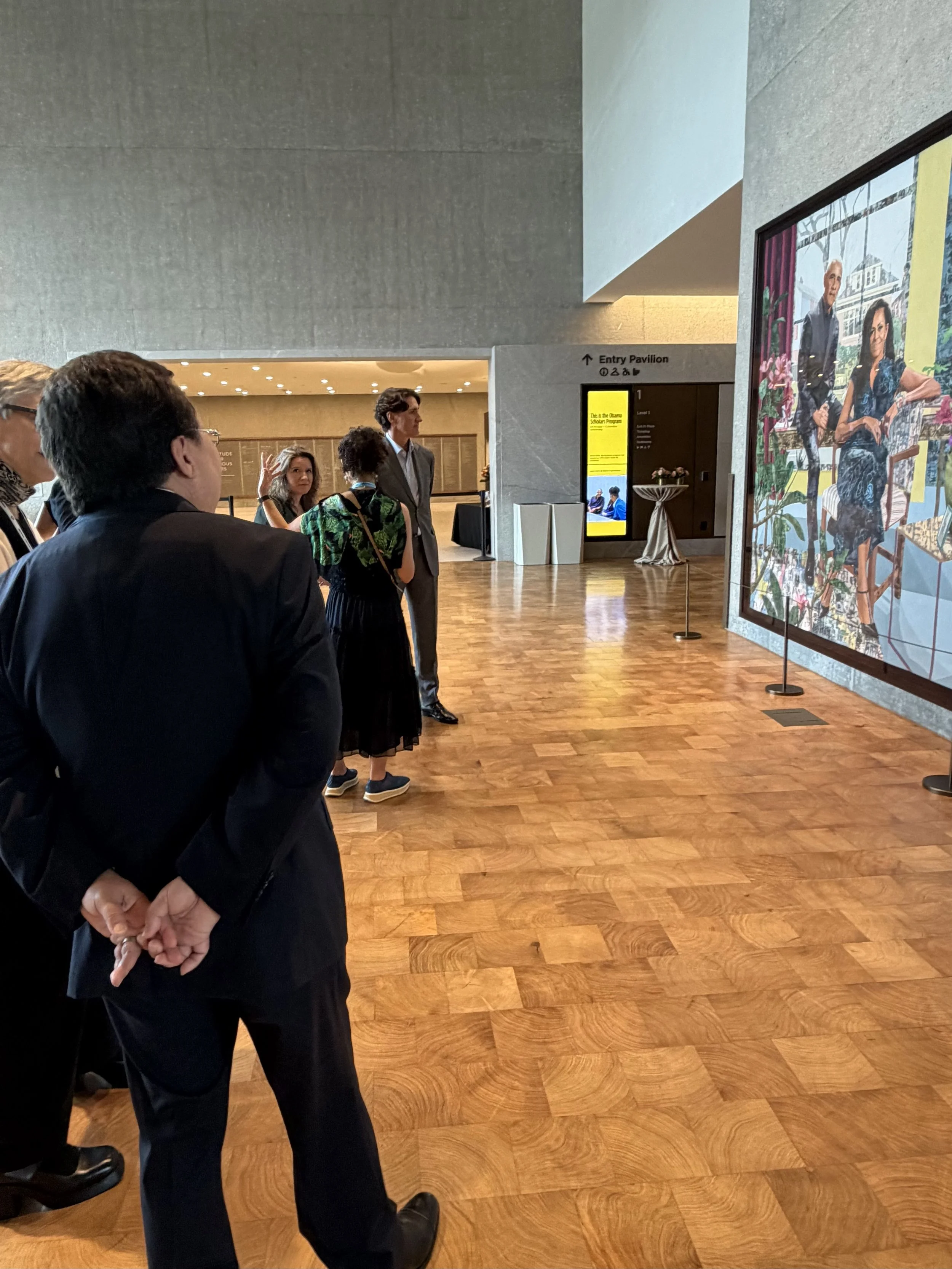
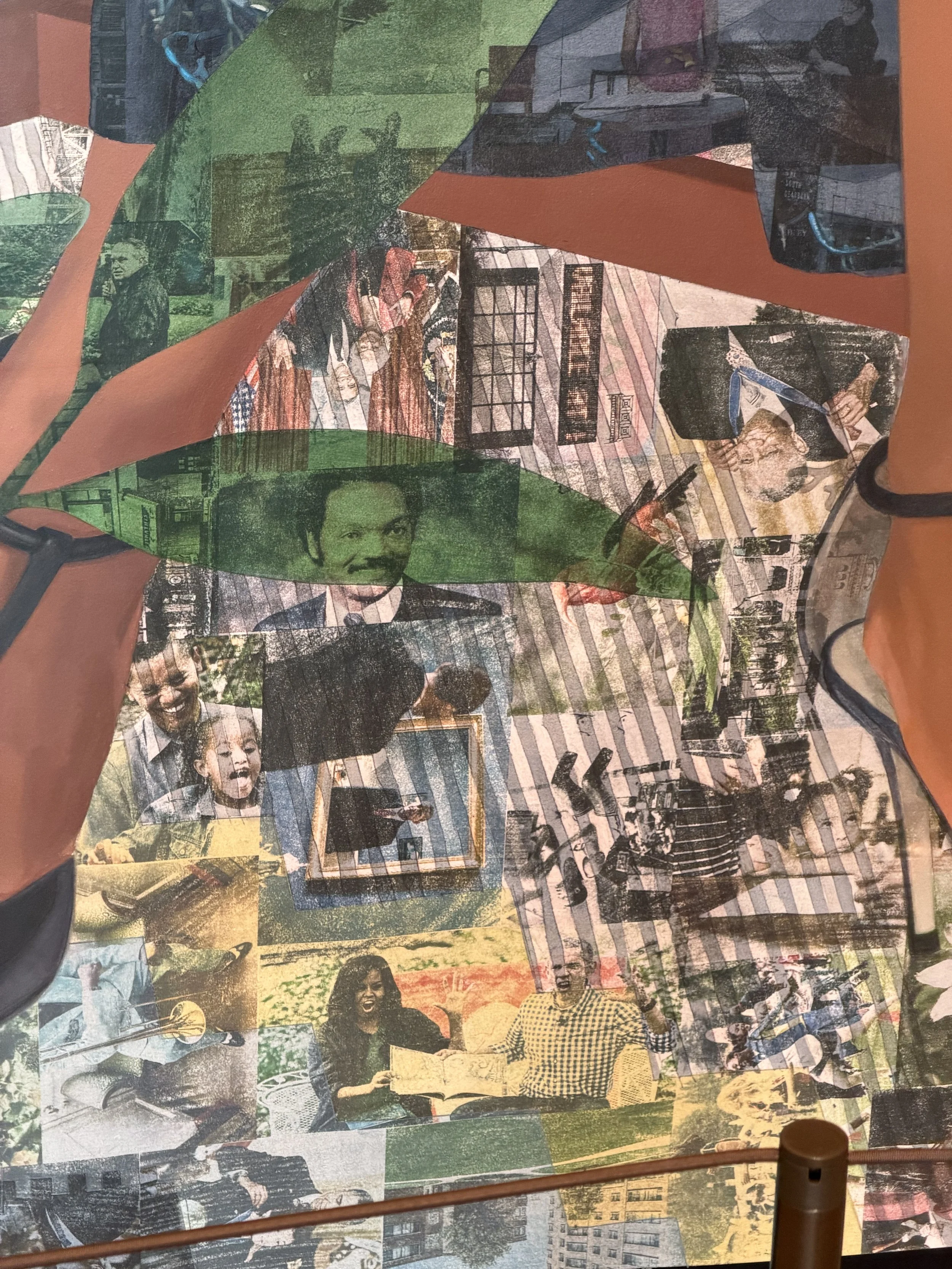
The Obamas: Springing Forth by Nigerian-American artist Njideka Akunyili Crosby. commissioned specifically for the Presidential Center.
How do you invite the world into a place without losing authenticity?
How do you create economic opportunity while preserving cultural identity?
How do you help people experience a country in a way that changes what they believe about it?
The more I listened, the more I realized tourism is often misunderstood.
At its best, tourism is not just about leisure.
It is about perception.
It is about access.
It is about empathy.
The places people visit become the places they understand.
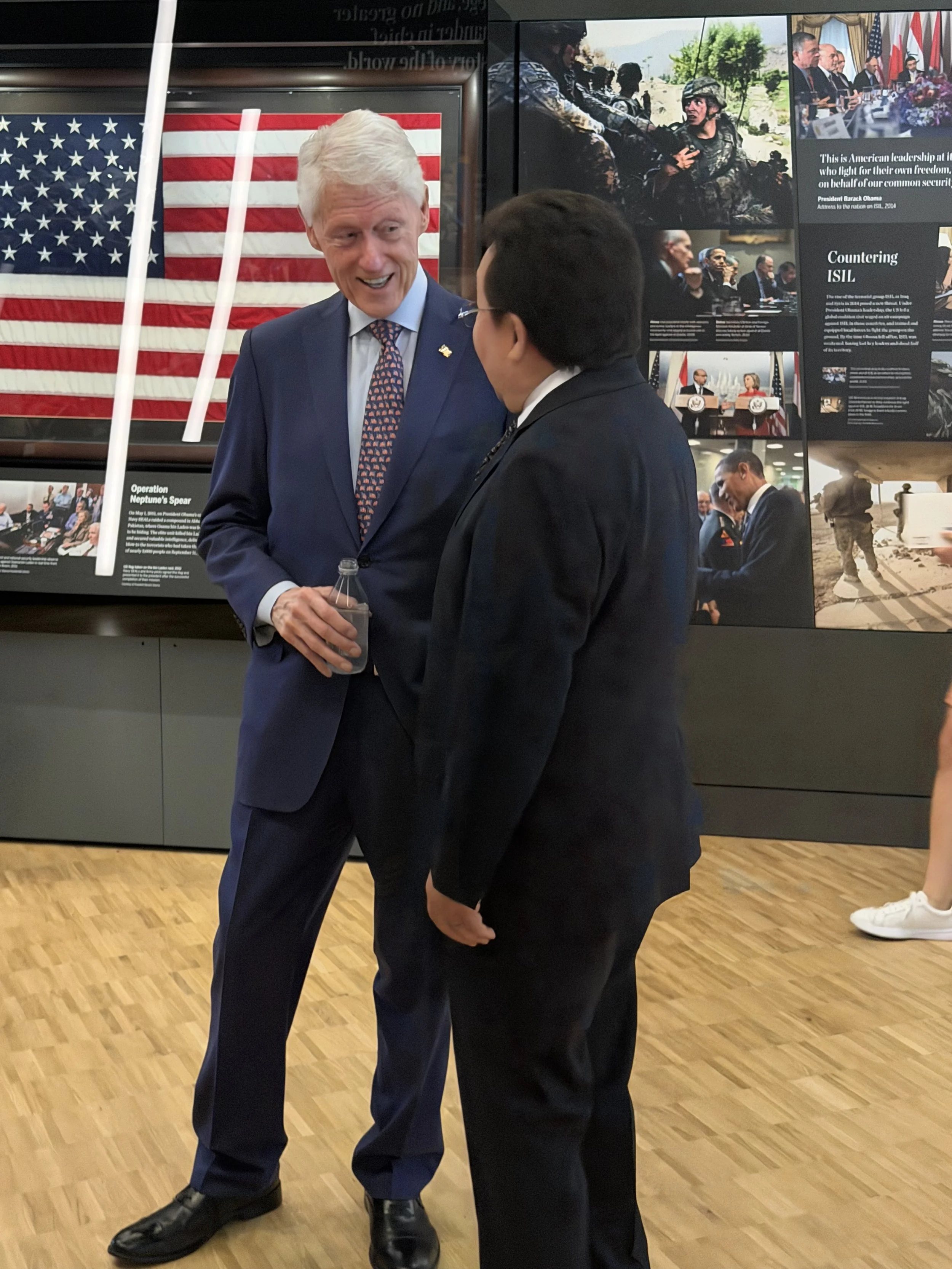
President Clinton shares with EB his excitement to tour Mongolia.
And the places they understand become the places they care about.
That matters for cities.
It matters for museums.
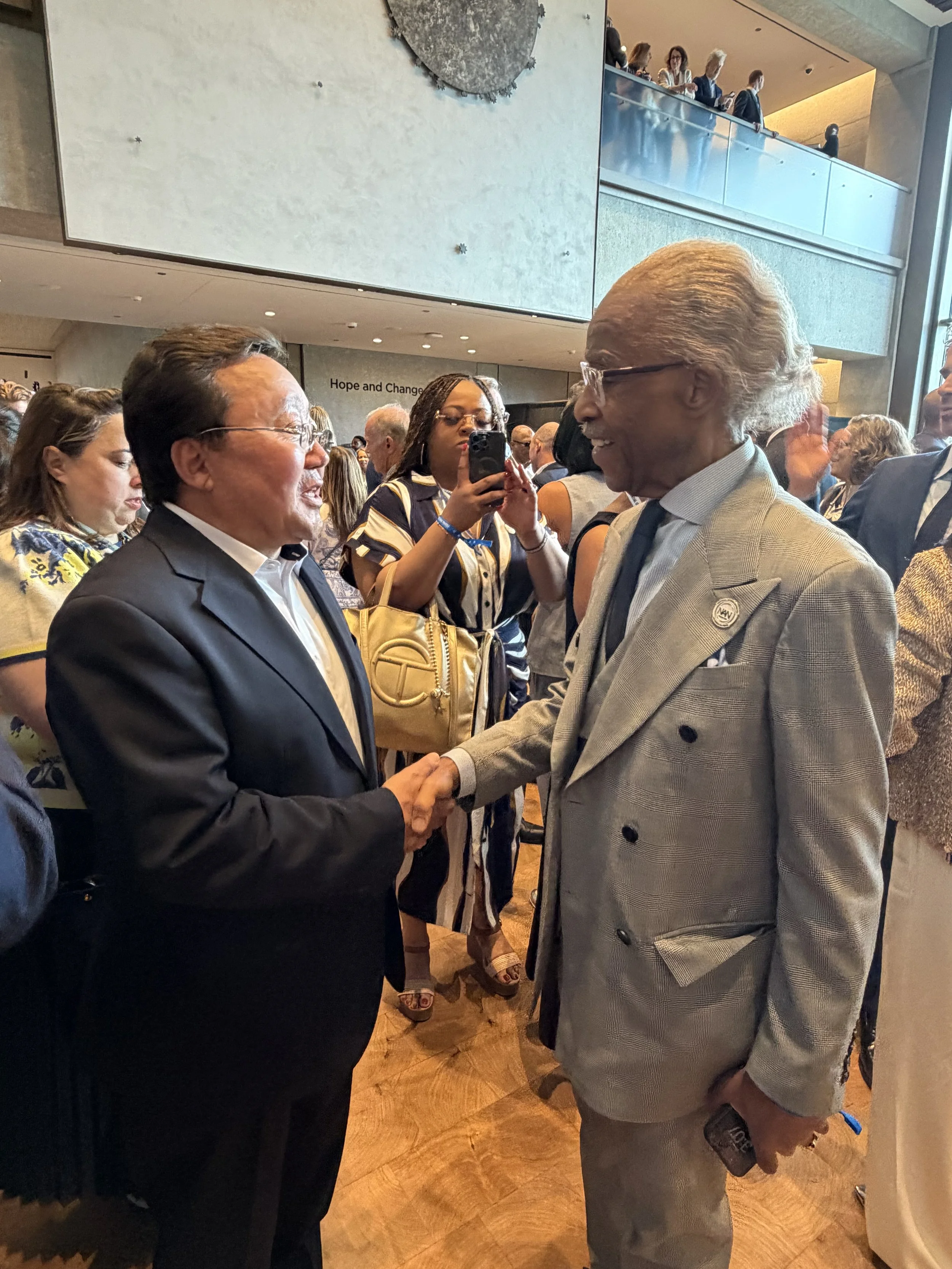
A nation’s story expands through relationships. EB with Reverend Al Sharpton
And it matters deeply for nations.
I see this same pattern emerging through a remarkable group of students I have the privilege of working with.
These young leaders understand something many adults forget.
Exposure changes people.
When you encounter history firsthand, when you walk through a cultural site, when you hear the story behind a place, something shifts.
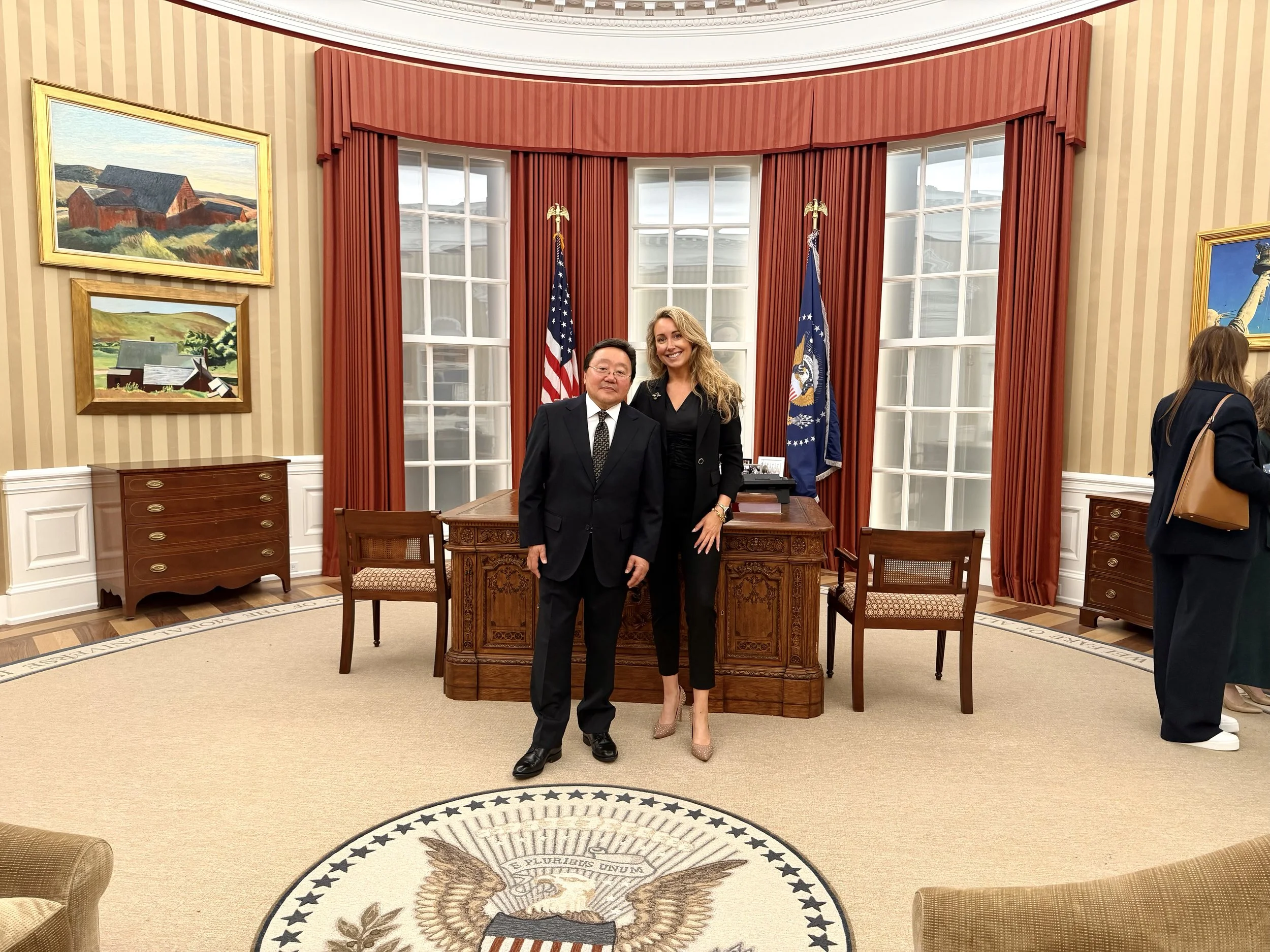
Standing here with EB, I felt the weight of history and the possibility of what comes next.
Your worldview expands.
Their generation understands instinctively that technology can widen access to these experiences in ways previous generations never imagined.
They are asking questions many institutions still have not fully answered.
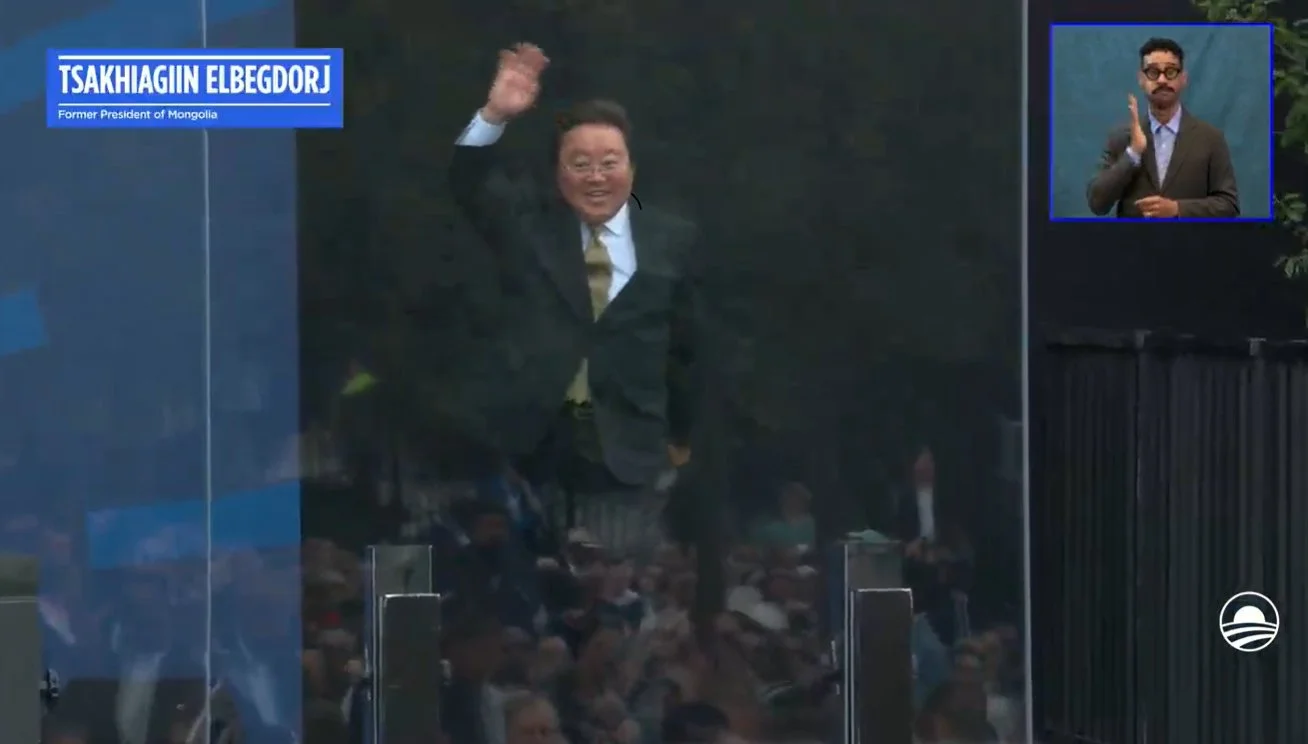
Still carrying the joy of a man who helped build a democracy.
How can technology make cultural heritage more accessible?
How can storytelling preserve meaning while expanding reach?
How can young people help share their own history for other young people?
This group of teens has come together spontaneously, not brought together by teachers, historians, or even parents.
The students are creatively problem solving! They have gained not just my support, but growing influence in the business sector and most importantly - enthusiasm!
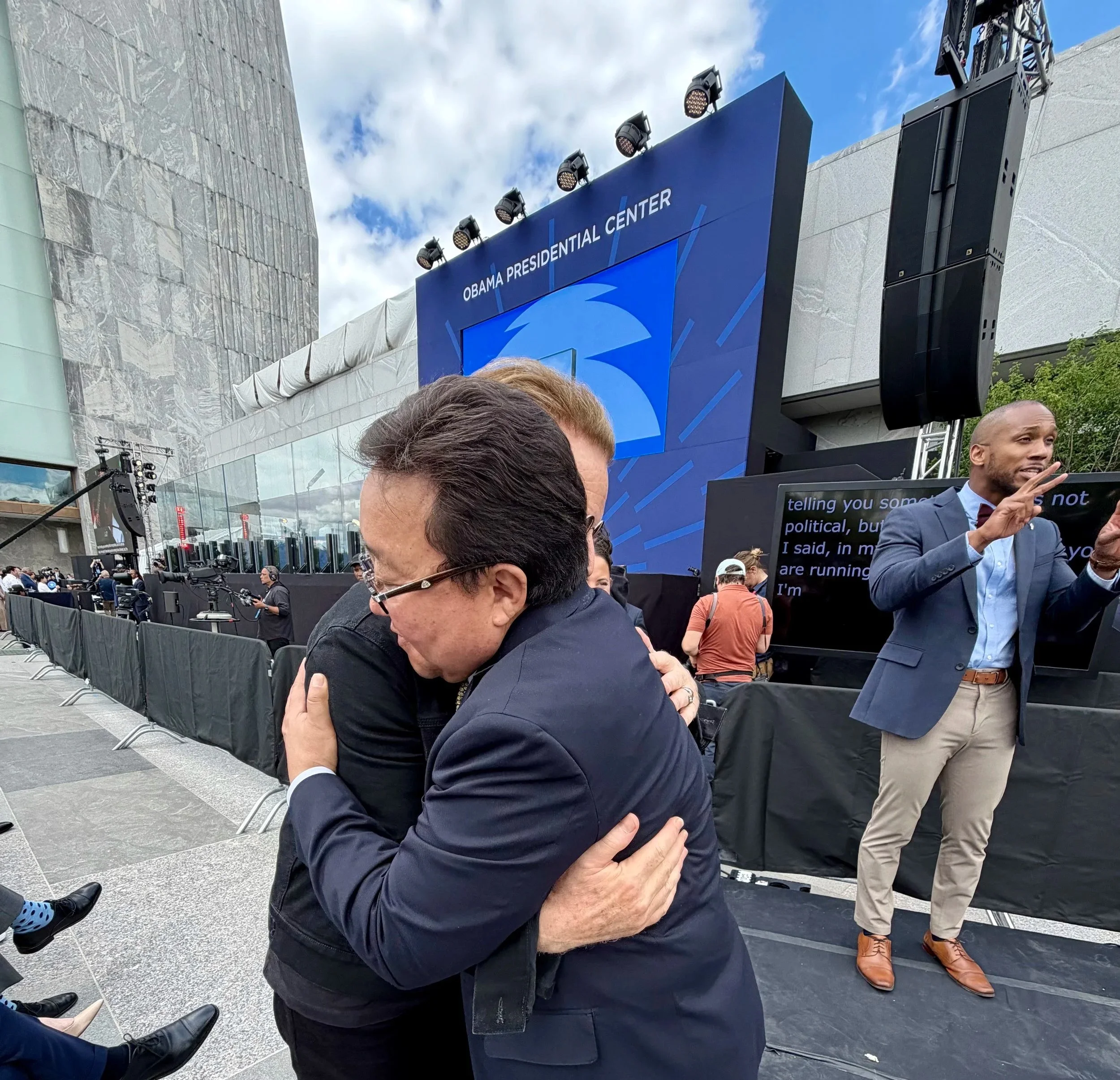
“I came all the way from Mongolia to give you this hug!” EB to Bono following his performance.
Can we not find enormous hope in their proposal for change?
Maybe that is one of the defining moments of our time.
Because narrative creates perception.
Perception shapes belief.
Belief influences behavior.
And behavior changes the future.
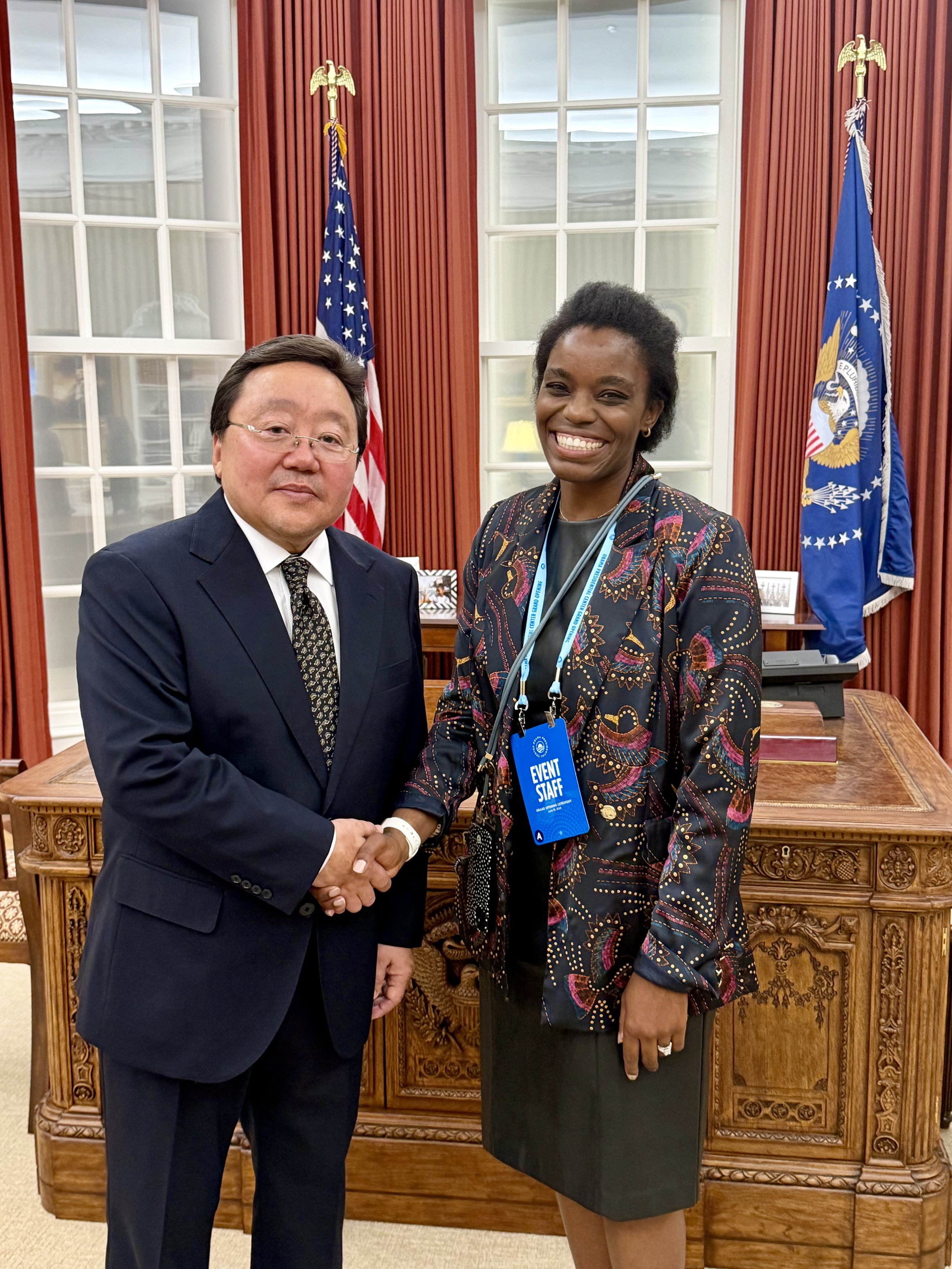
Leadership at its best connects innovation with service. EB with Leah Hoffman
The most influential people of the next decade may not simply be politicians or media organizations.
They may be the people who build bridges between culture, technology, business, and human experience.
The people who help stories travel.
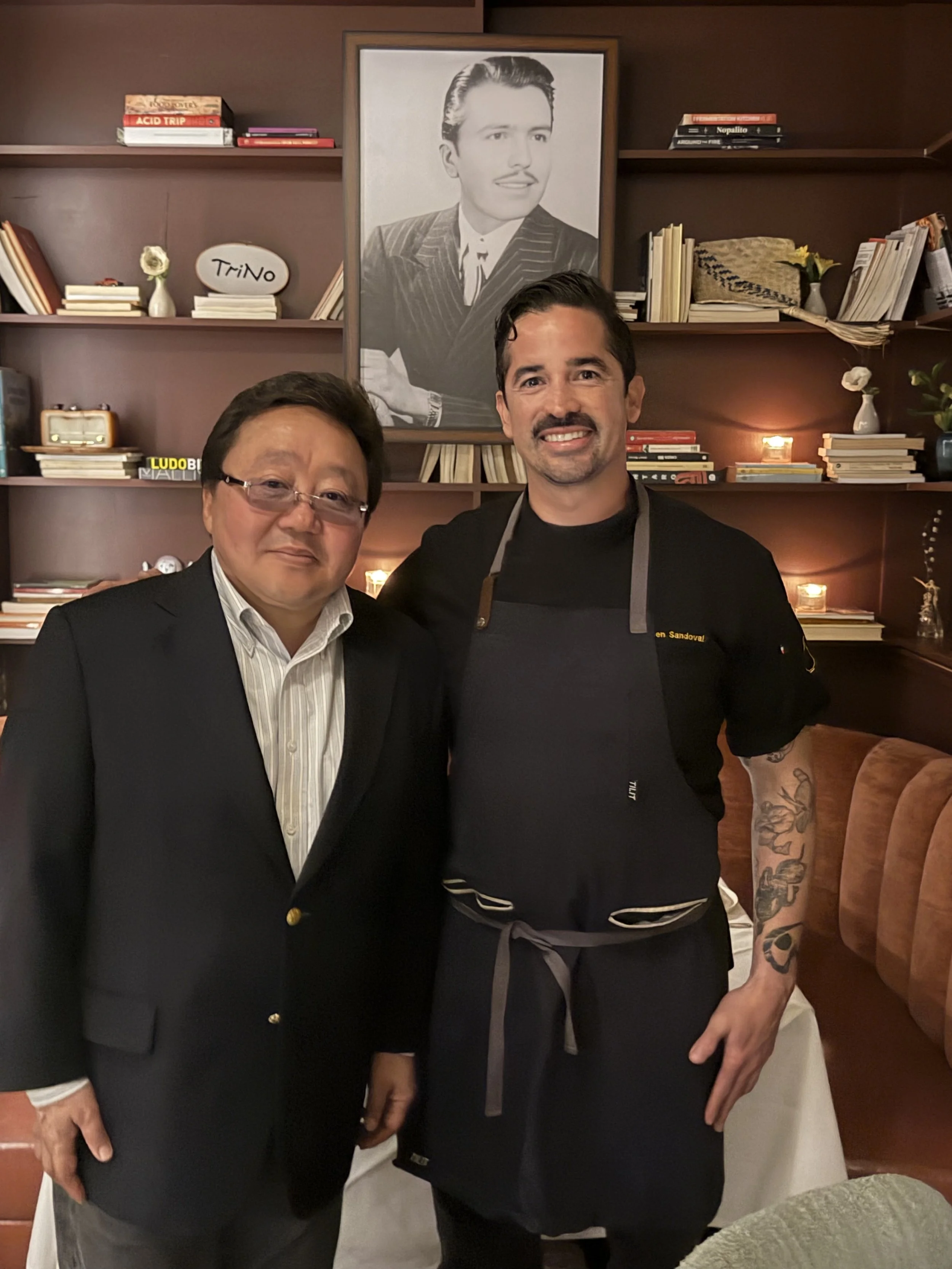
President Elbegdorj visits Chef Stephen Sandoval’s Chicago restaurant, Trino.
The people who help nations become more fully understood.
Maybe that is the real work.
Not controlling a narrative.
Not manufacturing one.
But thoughtfully expanding it.
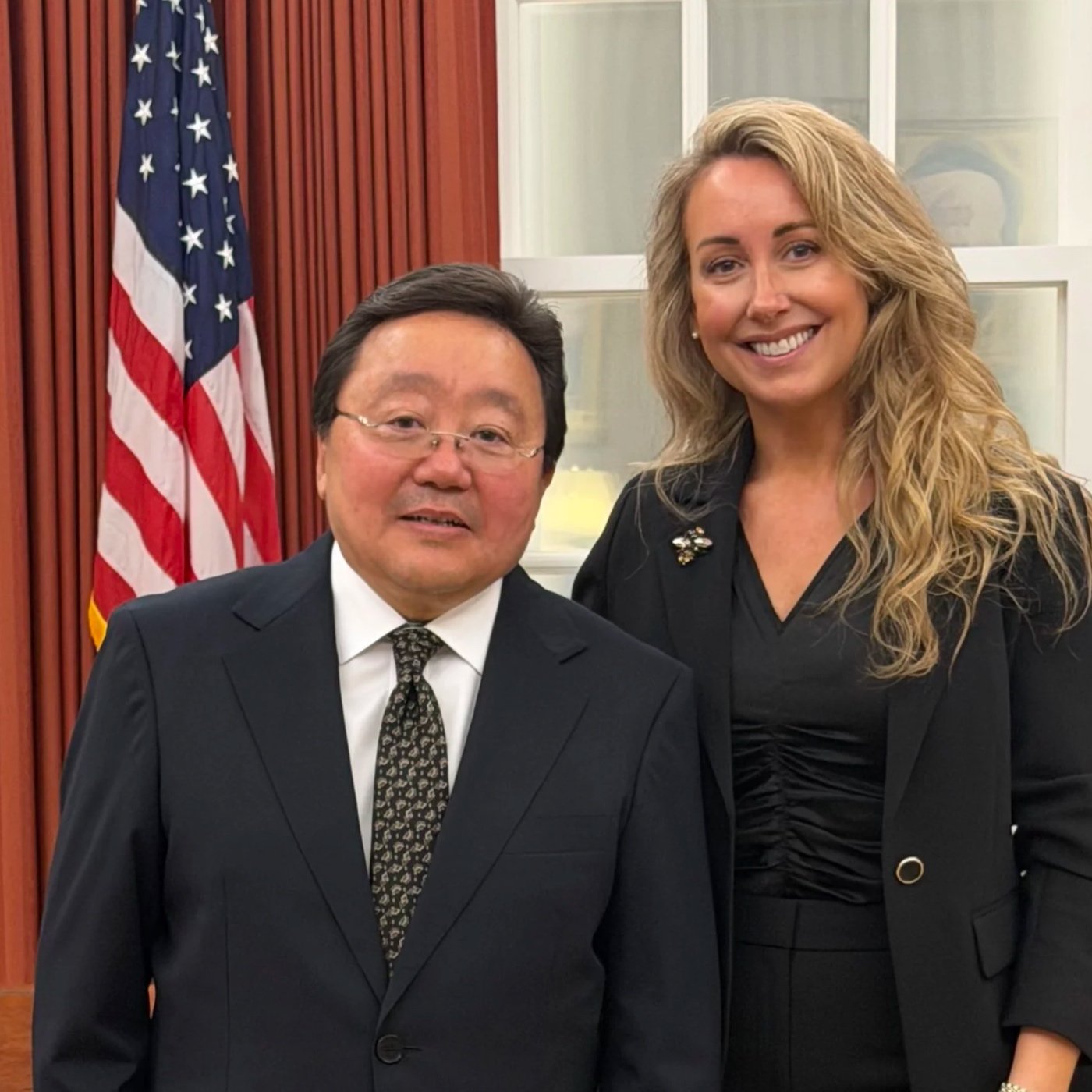
The future of a nation’s narrative is rarely shaped in a single speech or meeting. More often, it is built through a series of thoughtful conversations, meaningful relationships, and the courage to keep taking the next right step.
Making room for deeper truth.
For greater context.
For more human connection.
So I return to the question that followed me home yesterday.
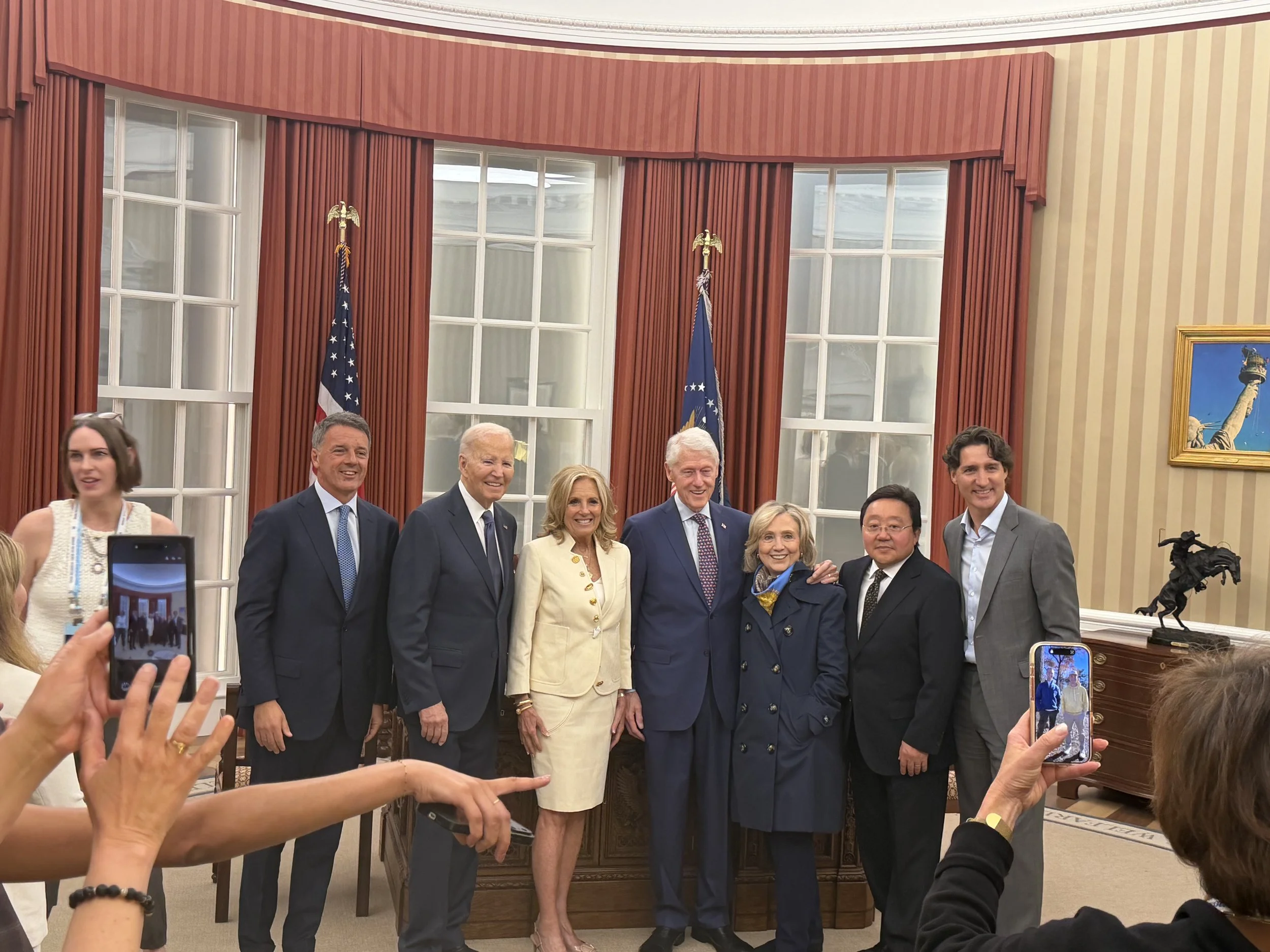
Who gets to shape the narrative of a nation?
Maybe the better question is this.
Who is willing to take responsibility for helping shape it well?
That feels like a question worth sitting with.
I know I will be.